

Why strike action isn’t being used to full effect
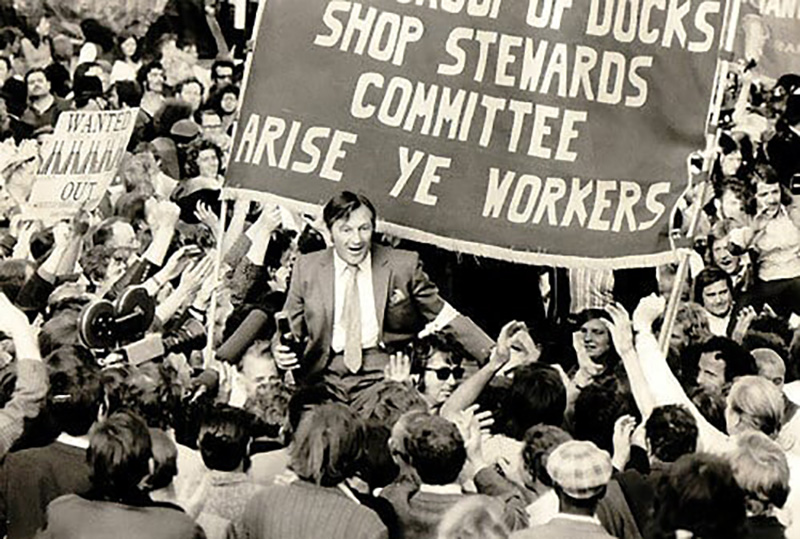
A unionised workforce removing their labour is a very important weapon in a worker’s armoury. The vast majority of case work for union reps is damage limitation. A strike is a sword that can be unsheathed to great effect for the rights of a worker. If we look at how the French have reacted to the appalling pension reforms being driven through by their deeply unpopular President Emmanuel Macron, you can see how much more this weapon can be used.
In Britain, we are obsessed with the ‘Trade’ aspect of trade unionism. We fight for percentage wage increases that won’t be harmful to the company, when in fact it’s the profit margins and not the company that are protected. As workers, of course we feel slightly beholden to a company to which we sell our labour. This is the employer at which we work and receive our pittance. However, this does not mean we have an obligation to protect profit margins. Companies which don’t generate profits are seen as failures, when essentially it is what a company produces that should be the measure of its success or failure, not the size of the CEO’s bonus.
So, when we strike it is not against the company, but against the unfair distribution of that profit. This still does not harness the true strength of industrial action. Arthur Scargill was feared by the ruling class because of how much of an influence he had become within the working class in Britain’s massively important coal industry. Not only did this prompt the shackles of the anti-trade union laws, but the acceleration of deindustrialisation in Britain. The strength of the workforce had become untenable for the ruling class. Wages were rising, profits were shrinking, and workers were growing in stature and confidence. Relying heavily on imported energy and goods was a welcome alternative to British workers having any semblance of strength.
Another key issue is that paid trade union officials have become intertwined and co-exist with the employers they are supposed to organise against. Their role and rewards become predicated on occasional pantomime battles that they have within their specific trade sector and/or region where they organise.
The French strike actions and public protests are not only driven by trade union-organised workers (only 2.5 million French workers are members of trade unions), but non-unionised workers and even workers in ‘transient’ employment participate. The recent pension reforms in France obviously affect huge swathes of the population, but the Gilets Jaunes (known here as the Yellow Vests) have been mobilising people for half a decade into public disobedience, initially as a protest against fuel prices, but eventually into a multi-strand protest movement which, while limited and at times disorganised, caused massive disruption to the French state.
In Britain, the Police, Crime, Sentencing and Courts Act (2022), described as ‘deeply authoritarian’ by Amnesty International, was pushed through Parliament. This act further buttressed police powers to shut down protests or to take industrial action, using deliberately ambiguous language such as ‘public nuisance’ or ‘noisy protests’ as offences which could bring the strong arm of the law against protestors. This further limits the ability to strike, which has already been already constricted by the Employment Act (1980), the Trade Union Act (1984) and the Trade Union and Labour Relations (Consolidation) Act (1992). Where was the public disobedience on British streets against any of these pieces of pernicious legislation? Where was the TUC leadership or the trade union leaderships? The trade union “leaders” were notable only for their empty words, followed by their conspicuous absence.
2022 was a year of strikes. Most prominent of these were those on Britain’s railways, led by the RMT’s General Secretary Mick Lynch, who has built a large media presence from both the hugely effective strike action and his own excellent performances on the ruling class media outlets and the well-remunerated fools which front them. His televised battles with the media have put him in the pantheon of left-wing heroes. It is therefore a great tragedy that he has used his newfound prominence to call on workers to vote for the anti-worker Labour Party.
The Conservative government has reacted to these strikes and the threat they pose to capital by introducing a Minimum Service Levels Act. No doubt emboldened by their ability to pass draconian laws in their recent past, that they feel capable of introducing another layer of legislation which forces people into slave like working conditions without the opportunity for recourse.
No one should enter the workplace without a trade union. Collective action is the greatest strength that a worker possesses in the face of an employer. Our criticism of British trade unionism is not to discourage workers from joining and becoming active in trade unions, but to recognise its limitations and acknowledge their previous failures. French workers have used strike action as a weapon to bludgeon the state, whereas British trade unions have used strike action only as a means of leverage. If used to full effect, strike action can be used to affect real change. If the leadership of trade unions were more militant and not bureaucratic careerists, aligned with a genuine socialist vanguard party, we could see social change that hasn’t been seen since the Chartists. The ruling parties would fear implementing authoritarian laws would cause unrest, not just unfavourable opinion poll numbers.
In order for strike action to win real change, it should never make concessions. Workers in struggle may have to cross lines (including legal ones – not picket lines!) and find themselves in extremely difficult and challenging situations, but victory for workers makes these struggles and challenges worth their efforts.
Change isn’t swift, easy or without struggle.

 Class Consciousness Project
Leave a comment