
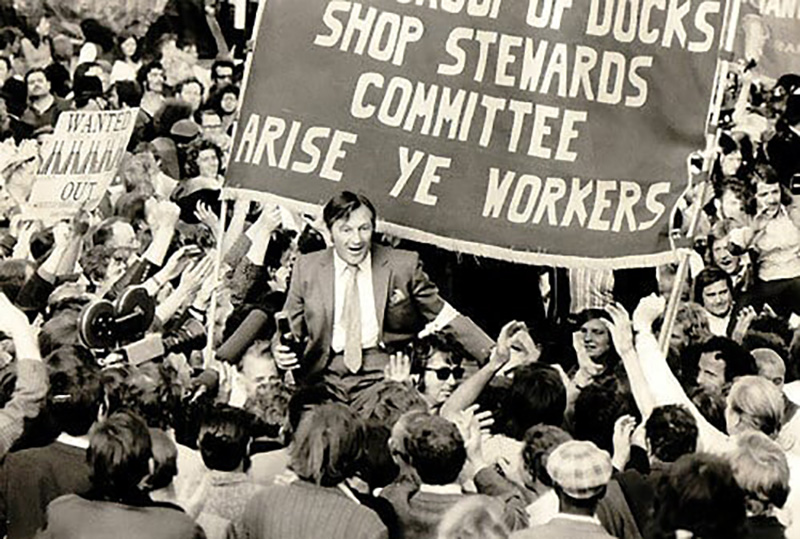

As it is now just over six months since we launched the project, it was decided by all comrades to review our position on the challenges posed by the continuing capitulations of trade union leaders.
When the Class Consciousness Project began, we emphasised that our aim was to respond to a clear need that existed within the British working class. This need is related to successful depoliticisation of the working class over the last forty years by the combined efforts of the government and employers. Their aims in doing so are absolutely clear: They want a workforce that is more pliable and not aware of its own potential power to challenge the rule of capital. They have been ably assisted in this endeavour by the leadership of the trade union movement. The aims of the trade union leaders in actively collaborating with this are to ensure that their control over the trade unions cannot be challenged from a rank-and-file level. This has created a situation where the working class, despite being under relentless attack from the employers, has been unable to sustain a fight back against this due to the treacherous and pusillanimous nature of the trade union leadership.
During the discussion, comrades outlined the issues that have developed over the course of the last six months. We have seen strikes that were strongly supported by the Communication Workers Union, National Education Union and Royal College of Nursing be capitulated upon by the leadership of these unions, often leading to mass discontent within their membership. We have also seen disgraceful positions be adopted by the TUC regarding the Ukraine war, under the influence of the State-sponsored Trotskyites of Alliance for Workers’ Liberty. We have also seen unions like Unite, led by the “left” choice Sharon Graham, endorse continuing affiliation to the Labour Party with no apparent pre-conditions being set for this. Graham and the Unite leadership have thus given Starmer a blank cheque, despite his commitment to continue the attacks on workers if he wins office and the long history Labour governments being just as bad, if not worse, for our class than the Tories.
With this in mind, comrades asked the question of whether we can, in good conscience, continue to tell workers to join such a movement. This point was discussed with comrades making several points in response:
- That at this stage, we should not tell workers to avoid joining unions as on a day-to-day practical level they can still be useful
- That the failures of leftist favourites like Lynch and Graham need to be properly examined and explained
- That we, as a project, need to be able to discern between working class organisation and growing class awareness and the role of the trade union bureaucracy
- That trade unionism is always going to be a limited and transitional form of class struggle.
With regard to these above points, comrades discussed if our line therefore required change or evolution. The consensus reached was that we needed to promote a proper understanding within the working class of the limitations or trade unions. Comrades stated that part of the problem with pre-existing “rank and file” organisations within trade unions was that they tended to pin their hopes upon the left wing of the bureaucracy and ended up becoming hostage to it.
Therefore, our approach should be one where we operate both inside and outside of the unions, uniting working class militants outside of the narrow confines of the unions. This was the approach of the original National Minority Movement and they were quite successful in earning the hatred of the likes of Walter Citrine, former General Secretary of the TUC, as a result. This should be reflected in our written material, podcasts and video content. We must trust in the instincts and intelligence of the working class to understand the reality of the situation here, and not repeat the errors of the opportunists in promoting one ‘left’ bureaucrat or another as the solution.
Comrades agreed at the end of the discussion to review our position on this question at least twice a year.
 Class Consciousness Project
Leave a comment