
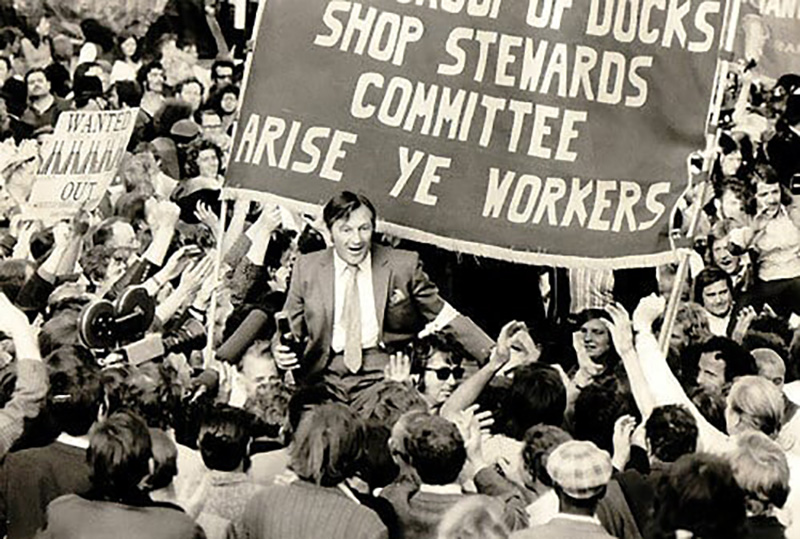
The Myths Of British Democracy Vanish Very Quickly When The Ruling Class Feel Threatened By Workers Power
British democracy is one of the great myths that every British worker is subjected to as propaganda from the ruling class as we grow up. The idea that Britain, unique amongst all nations, has an unbroken tradition of the slow development of greater democratic freedoms as time has gone on. An unbroken 700-year line stretching from the time of the signing of the Magna Carta to the extension of the franchise to all adults by 1929.
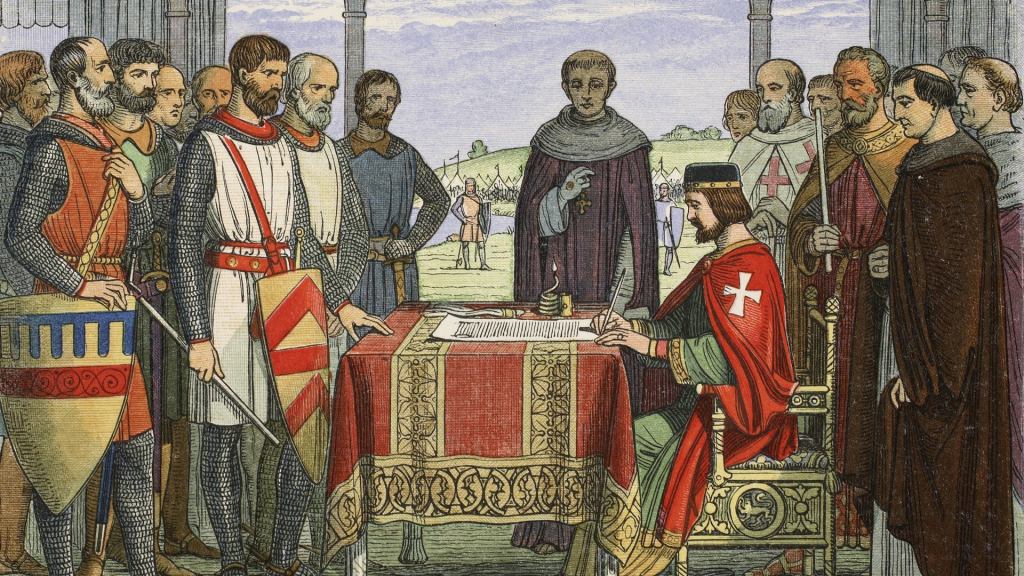
It is of course a myth that collapses upon the slightest examination. The ruling class has never given up anything except by threat of force and that remains the case to this day, but it is a powerful myth nonetheless. It falls apart when you become aware of how fanatically the ruling class has opposed any kind of democratic reforms, only accepting them when revolution was the alternative and how quickly various sections of the ruling class have been over the years to discard such supposedly esteemed values as the “rule of law” or “democracy” when they feel that such things are barriers to the defence of their class interests. The late, great, John Pilger chronicled one such episode in his 1998 book ‘Hidden Agendas’ when describing his time at the Daily Mirror when it had the eccentric figure of Cecil Harmsworth-King as its Chairman.
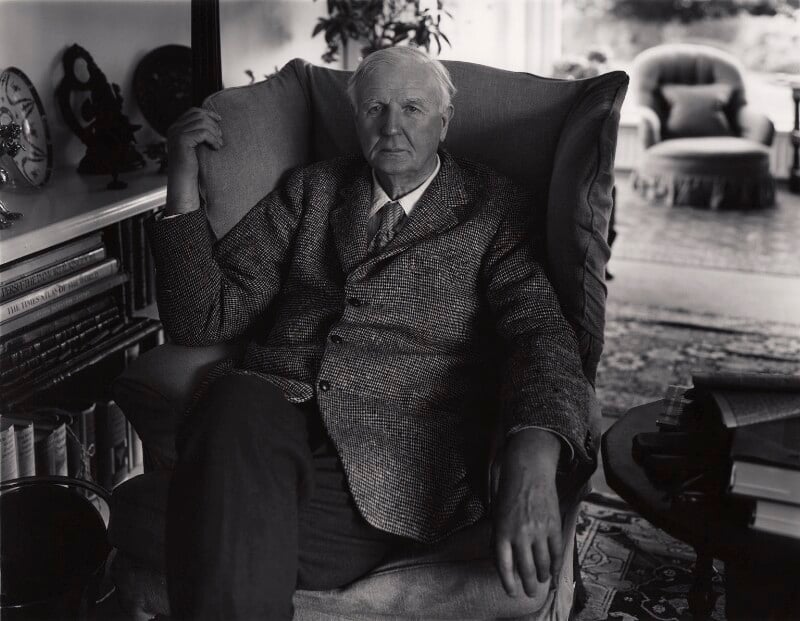
King was from a family deeply connected with the newspaper business being the nephew of Alfred Harmsworth (1st Viscount Northcliffe) and Harold Harmsworth (1st Viscount Rothermere), the two men who developed both the Daily Mail and Daily Mirror as mass market tabloids. Very much a man of the ruling class, as described by Pilger, King apparently succumbed to megalomania in 1968 when he personally authored an editorial and placed it on the front page of the Daily Mirror calling for the government to resign.
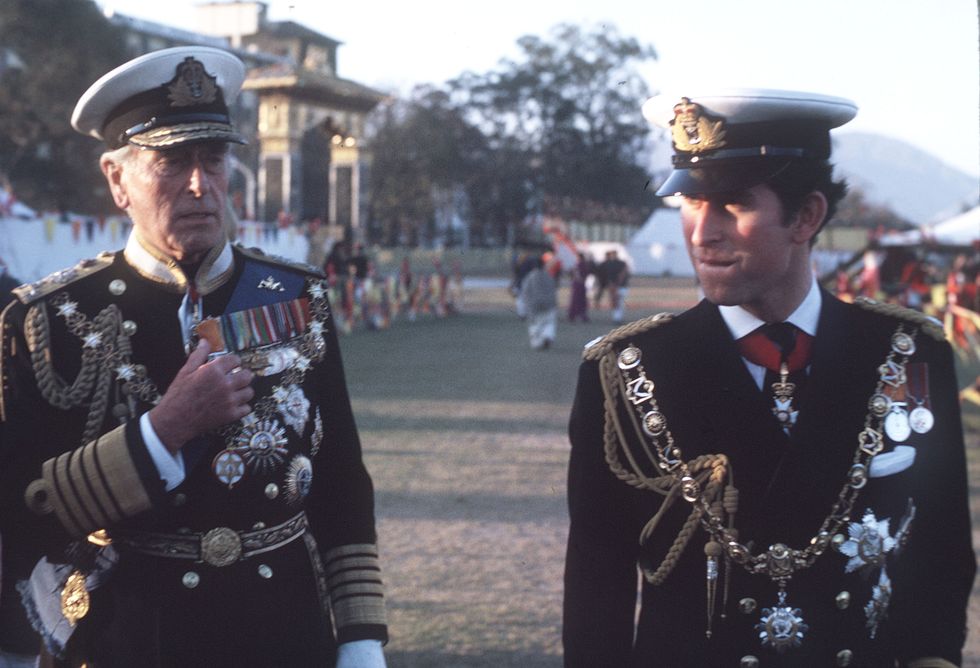
This was at the same time as Harmsworth-King was engaging in clandestine meetings with Lord Louis Mountbatten, who he hoped would head an emergency government modelled on how his Lordship had governed India in World War II. Mountbatten is now proven to have involved himself in multiple plots in the late 1960s and early 1970s – why is that the case? The truth of the matter is that the period which Mountbatten and his friends were plotting was a time of rising working class militancy.
As the British economy stalled following two decades of growth after the end of World War II, fuelled by post war reconstruction, the capitalist class looked to do what it always does during a recession and make capitalism profitable again by attacking the conditions of the working class. This was particularly the case in industry, where the capitalists blamed the working class for “blocking innovation” and other such lies to cover up the fact that slow-downs and crashes are an inevitable and irrevocable part of capitalism. The response from the ruling class was to demand wage cuts in all major industries, leading to an escalating series of strikes by merchant sailors (led by a young militant by the name of John Prescott) and wildcat strikes across the coal industry in 1969. There were also increasing numbers of strikes in the car industry and in the engineering plants across the West Midlands.
The most openly reactionary section of the ruling class (typified by King) had decided by 1968 that Harold Wilson and the Labour party were not up to the task of “restoring competitiveness” to British industry, this being a coded phrase which in actual fact means carrying out a relentless attack on workers to force down wages. Wilson did attempt to lean on the trade union leaders to prevent strikes but it wasn’t the leaders at the time who were powering the strike waves of the late 1960s but the workers themselves. The ruling class started to grow paranoid as fear of the working class drove many of them over the edge of sanity. According to former Mi5 agent Peter Wright, in his book Spycatcher, the senior men in the intelligence services became convinced that the very right wing, Harold Wilson, was in fact a secret KGB asset. This is how these reactionary bourgeois elements always think. When Wilson was unable to rein in the strikes or pass the anti union legislation the employers were demanding they became convinced that it must be because of Soviet interference. The idea that it was the power of the working class which was derailing them never entered into their heads it would seem. During the 1974-79 Labour government the plots of the ruling class continued with the army staging manoeuvres at Heathrow Airport which were not known to the Wilson cabinet beforehand.

This was reported by journalist Paul Foot as being a plan hatched by Mi5 and Mi6 to remove the Wilson government, a plot named ‘Operation Clockwork Orange’ (after the film and novel of the same name) and was a scheme that involved senior intelligence officials and figures within the British military high command. Faced with strike waves of the early 1970s and the Irish Republican campaign of armed resistance the ruling class was more than ready to opt for the establishment of a dictatorship. What would have been the aim of such a regime? The job would have been to carry out the attacks on the working class that Wilson and Heath had been prevented from doing by the resistance of the working class. Ultimately, the ruling class took the more parliamentary route and, with the active assistance of the Labour Party leaders and the TUC, destroyed the most militant sections of the union movement.
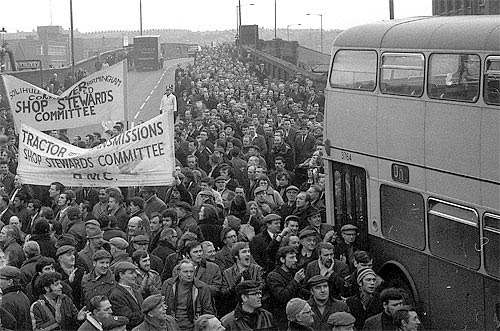
These are all vital historical lessons for workers to examine as we enter into a new era of crisis for British capitalism. The same demands made back then by the employers are being made now, to destroy the living standards of the working class in order to make British capitalism profitable again. If they can’t get that through “democracy” then they will try to turn to dictatorship. That is a risky move on the part of the ruling class but they are now in an even greater crisis than was the case in 1968-1974 and thus may be prepared to take more desperate moves. We must all learn from this history and never fall for any words that may be said by members of the capitalist class or their politicians about “democracy” or “rule of law” or any other such buzzwords. They are out to defend their class interests and are prepared to use every weapon they can against us because they know it, ultimately, the capitalist system itself which is at stake. Our class must become similarly aware of the challenge that faces us and be prepared to respond.

 Class Consciousness Project
Leave a comment