
Imperialism.
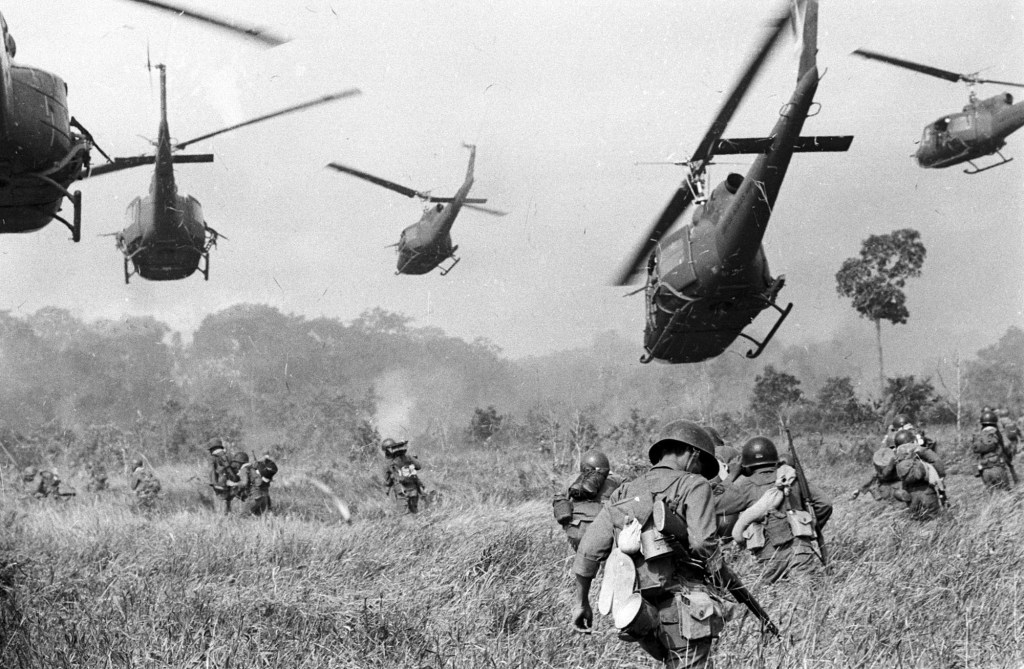
The Vietnam War was not fought for democracy, nor was it waged to protect the Vietnamese people. It was a war driven by numbers—statistics of bodies, bombs, and bullets—all in service of a U.S. ruling class desperate to crush a socialist movement that threatened their global dominance. In the brilliant, but harrowing, book by Nick Turse Kill Anything That Moves, Turse reveals that the Vietnam War was not merely a series of isolated incidents but a systematic campaign of mass murder all driven by this idea of a statistical war. For the people of Vietnam, this was not merely a battlefield, but a relentless campaign of terror and displacement. This significantly agrarian people, who once lived amongst the natural areas of Vietnam, now lived in a warzone.
Unlike previous wars, where victory was measured by territorial control, the United States waged a war of attrition. The only metric of success was body counts—how many “enemy” fighters could be killed in a given day. The problem? The lines between soldier and civilian meant nothing to a military that had been desensitised and sought nothing but a higher kill count. Soldiers were trained, before being released on the unwitting country, to see all Vietnamese as combatants. Stripped of all empathy, these soldiers were pushed to glorify violence and kill counts, with stories of soldiers collecting ears to prove their kills.
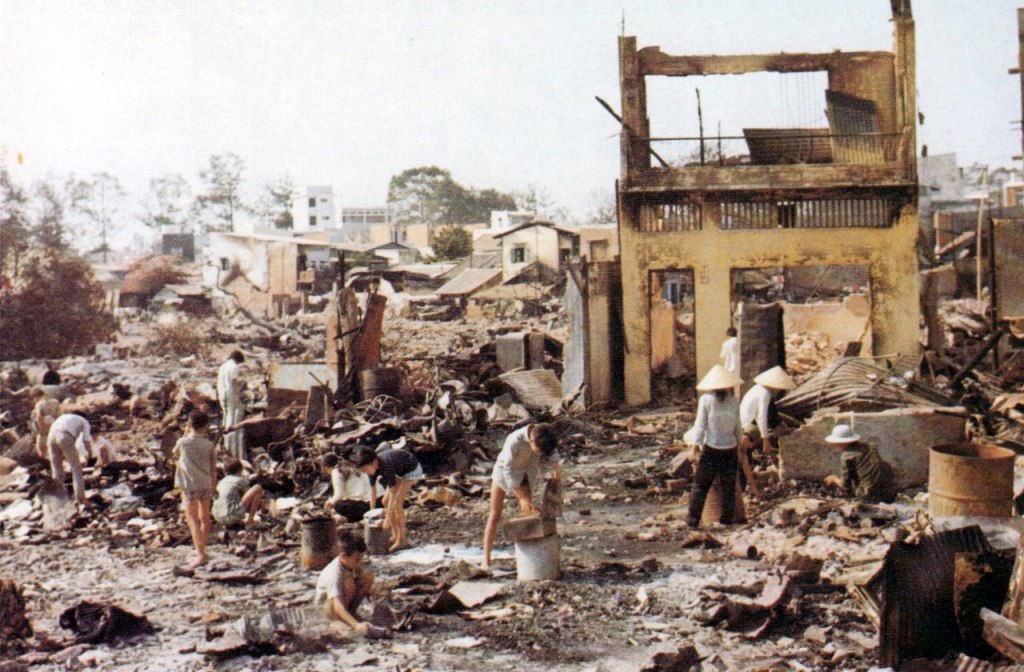
Villages suspected of harbouring Viet Cong were bombed into oblivion, homes were torched, and entire families slaughtered—all to inflate statistics that made generals look “successful” on paper.
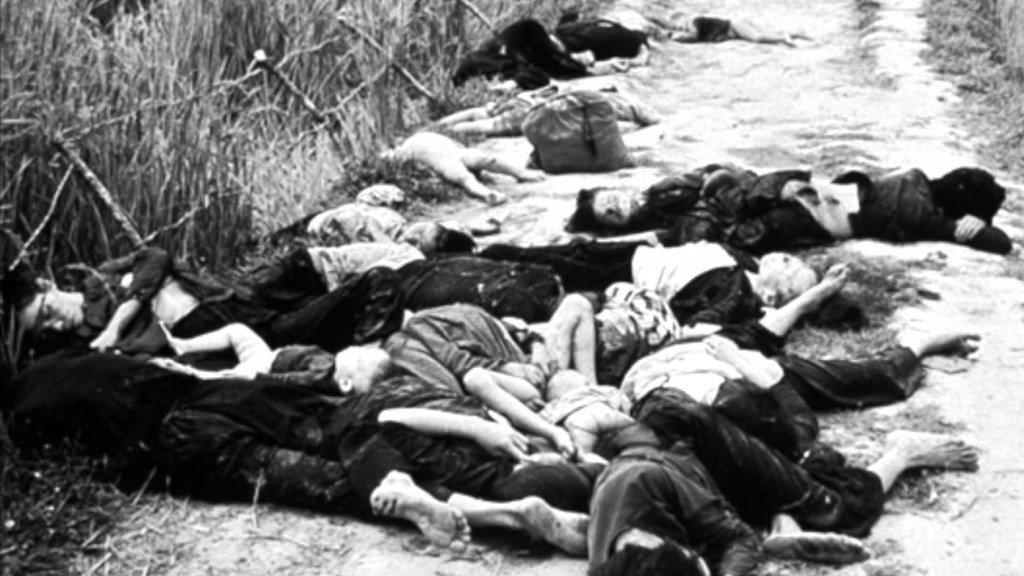
The My Lai Massacre in 1968 is probably the most famous crime committed in this war. Even though it was sold to the public as an unfortunate event it was not an isolated incident but an inevitable product of a military doctrine that dehumanised an entire population. Under the U.S. policy of “free-fire zones,” any Vietnamese person in certain areas was considered an enemy combatant. To the American war planners, Vietnamese lives were expendable, mere numbers in an equation of conquest.
Divide and Conquer
Vietnam was always a unified nation, with a long history of resistance against foreign occupation, from the Chinese to the French. However, after the defeat of the French in 1954, the U.S. stepped in. To ensure dominance the U.S. divided Vietnam into two separate states: North and South Vietnam. The partition was not the will of the Vietnamese people but a cold imperialist decision by the West, designed to block the spread of socialism and secure western interests.
The division was artificial, an imposition to thwart the nationalist revolution led by Ho Chi Minh in the north. The U.S. created the puppet regime of South Vietnam, backed by military aid, political support, and the promise of “protection” against the so-called communist threat (Sound familiar? See South Korea, Taiwan, Kosovo etc). The South was little more than an American-controlled outpost, with a corrupt and illegitimate government that had no real mandate from the people. The north, on the other hand, was a stronghold of anti-colonial struggle, committed to the class struggle and socialist ideals.
This partition not only undermined Vietnam’s sovereignty but also allowed the U.S. to gain control over the country’s rich resources, including rubber, rice, and minerals. The U.S. sought to exploit Vietnam’s resources for its own capitalist interests, all while keeping the country divided to prevent any unified resistance. This war was not just about fighting communisn, but stripping the Vietnamese people of their land, resources, and future.
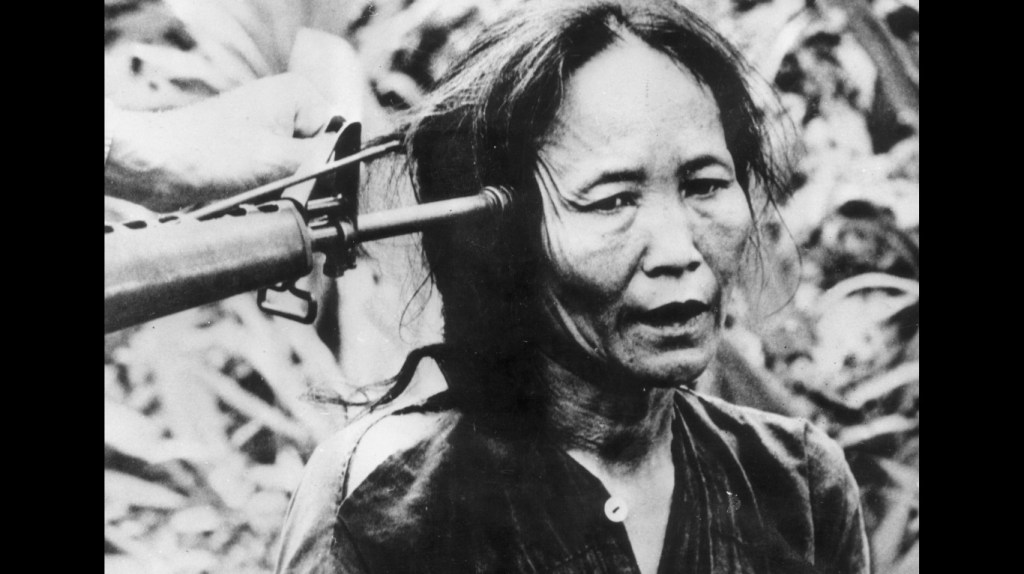
The official U.S. justification for the war was to “contain communism” and protect the sovereignty of the puppet country South Vietnam. This was a blatant lie. The Democratic Republic of Vietnam (North Vietnam) and the so called Viet Cong represented the legitimate struggle of the Vietnamese working class and peasantry against colonialism and capitalism. The Geneva Accords of 1954 had promised national elections, which the U.S. and its puppet regime in the South refused to hold—because they knew Ho Chi Minh had vast support. The U.S only supports democracy when it acts in their interests.
The war was not about protecting sovereignty but about crushing a people’s revolution. The U.S. was not interested in democracy; they were interested in maintaining a world order where capital ruled unchecked. Every bomb dropped on Hanoi, every village torched by napalm, and every child poisoned by Agent Orange was a declaration that socialism would not be tolerated by the west.
The Cost Paid by the Vietnamese People
The human suffering inflicted by this war is incalculable. Estimated more than three million Vietnamese were killed, the vast majority of them civilians. The chemical warfare waged by the U.S.—particularly with Agent Orange—left generations deformed and sick, a lasting scar of imperialist cruelty. Entire villages were erased, millions were displaced, and the countryside was left in ruins.
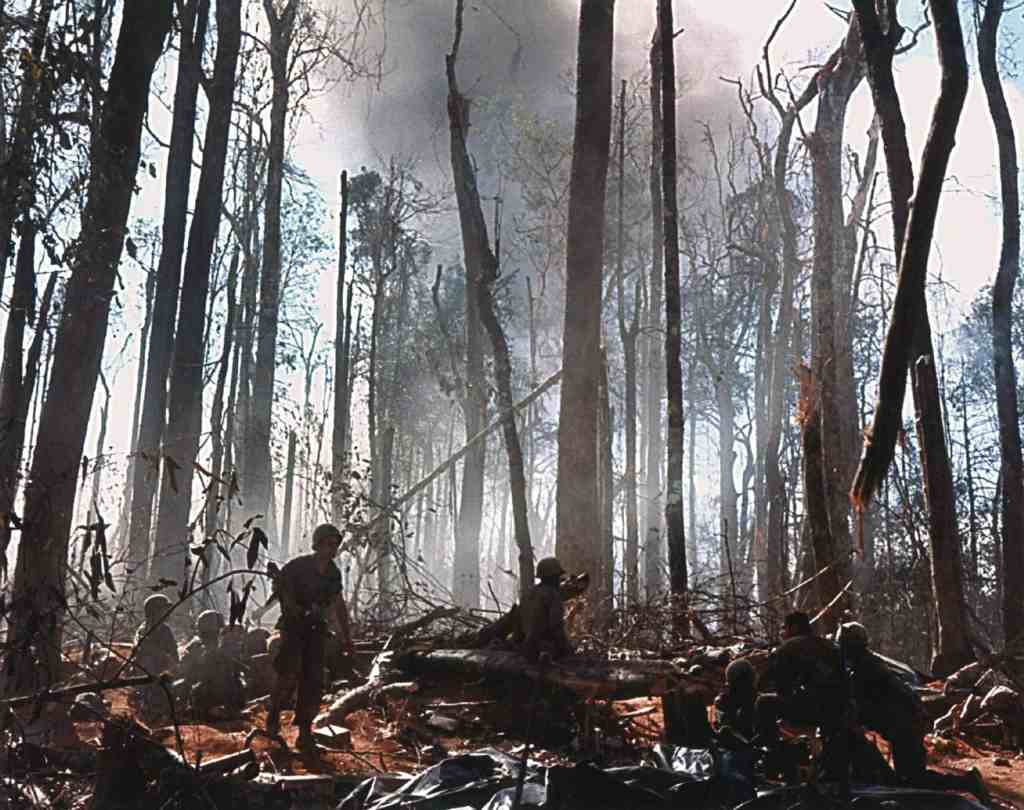
But the U.S. did not just fail militarily; they failed politically. Instead of breaking the will of the Vietnamese people, they steeled it. The revolution persisted, and in 1975, the U.S. fled Saigon, defeated by a people who refused to be conquered. This has been a common theme when the imperialists have fought boots on the ground, kinetic warfare. Paid western soldiers have always struggled against guerrilla warfare, supported and fought by, the oppressed people of the nation that western imperialism has set its sights on.
No Reparations, No Justice.
After the war ended, the United States still continued to hurt Vietnam. They refused to pay reparations for the devastation they had caused. Not only did they leave the Vietnamese people with the scars of war, but they also placed them under economic siege. For decades after the war, the U.S. imposed sanctions on Vietnam, preventing it from engaging in trade with other nations, further crippling the country’s recovery.
The U.S. used its economic might to hold Vietnam to ransom, keeping it isolated on the world stage. This was not just a war of bullets but a war of economic attrition—denying the Vietnamese people the ability to rebuild and recover from the horrors of war. The imposition of a brutal embargo was another example of American imperialism seeking to extract maximum benefit from its defeat in Vietnam, ensuring that the country remained in a weakened, dependent state.
Lessons for the Working Class.
The Vietnam War is a stark lesson in the nature of imperialism. The ruling class of the United States, in its insatiable thirst to destroy socialism, waged a genocidal war against a people who sought only self-determination. For the global working class, this war exposes the true face of capitalism: one that sees human lives as nothing more than collateral in the pursuit of profit.
Vietnam stood as a beacon of resistance against imperialist aggression, proving that no amount of bombs, bullets, or body counts can defeat the revolutionary will of the people. The struggle against capitalism and imperialism continues, and the lessons of Vietnam must never be forgotten.
“They cannot win this war. They may send 100,000, 200,000, or even 500,000 men, but they cannot win. Because it is impossible to defeat an entire people who are determined to fight to the last drop of blood”
– Fidel Castro
 Class Consciousness Project
Leave a comment