One of the more banal norms of the modern day is the WhatsApp group. A convenient tool for friendship circles, hobbies or even workspaces, it allows people to speak en masse and share information in real time. Ever since the early internet, discussion forums and message boards have been a mainstay of communication. Now, with smartphones and mobile data, we carry these forums in our pockets.
WhatsApp, owned by Meta, remains the most widely used messaging app. However, due to its well-known security flaws, alternative platforms have gained traction—such as Telegram and Signal. Notably, Signal was reportedly the preferred choice of Trump’s White House staff, likely due to its end-to-end encryption and its hands-off privacy stance.
And that leads us to one of the most bizarre stories to emerge from what may well be the most unhinged U.S. administration in living memory. A journalist was mistakenly added to a Signal group chat that included senior government figures – Vice President J.D. Vance, Secretary of State Marco Rubio, and Director of National Intelligence Tulsi Gabbard among them. Whether this was a genuine error or a calculated “leak” designed to test public reaction is up for debate, but either way, it’s an eye-opening glimpse into the mindset of the Trump administration.
The journalist in question was The Atlantic’s editor-in-chief, Jeffrey Goldberg. In a recent piece, he details how he was added by Michael Waltz (Trump’s National Security Advisor) to a group titled Houthi P.C. Small Group. Upon joining, Goldberg was greeted with a standard introduction message outlining the group’s purpose and its expected participants, effectively giving him access to a backchannel discussion among the highest levels of U.S. power.
The conversation focused on potential retaliation against Ansar Allah—the Yemeni movement more commonly referred to in the West as the Houthis—who had recently renewed attacks on commercial shipping routes in the Red Sea. The tone of the exchange was nationalist, and very revealing. Vice President Vance chimed in with: “If you think we should do it, then let’s go!”, followed by the telling quip: “I just hate bailing out Europe again.”
Pete Hegseth, a former Fox News presenter, replied by calling Europe “free loaders” and “pathetic,” with Trump advisor Stephen Miller adding that the U.S. should make it “clear to Egypt and Europe what we expect in return.” In short, these figures acknowledged that securing the shipping lane would primarily benefit Europe—and they didn’t want to foot the bill without extracting something in return. What the clowns in the Trump administration don’t realise is that the US imperialists have been extracting payment from the Europeans since 1945 in one form or another.
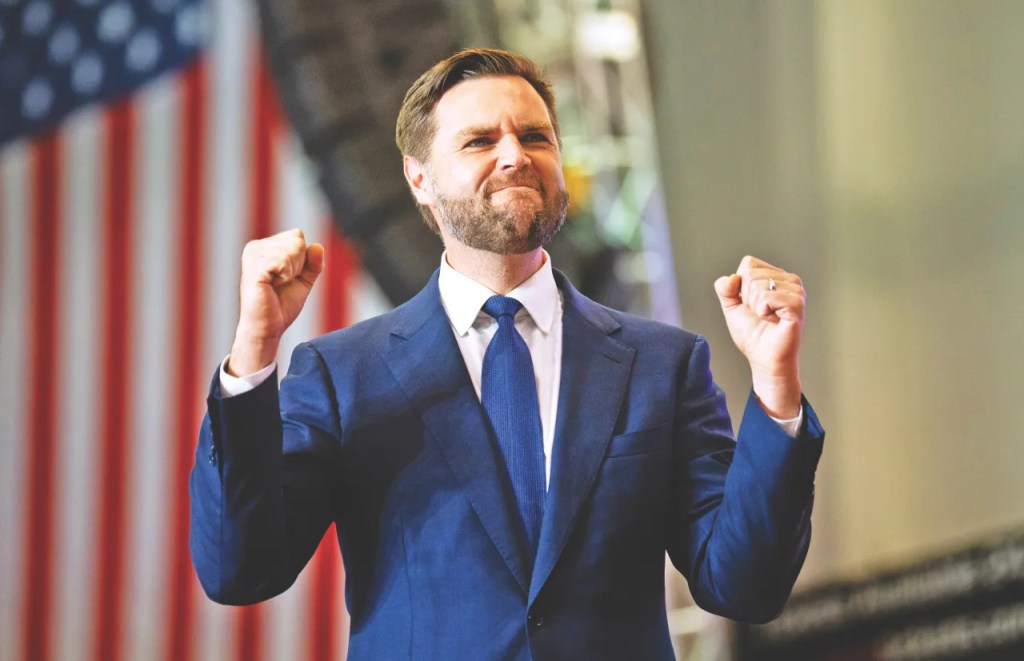
The exchange reeks of American exceptionalism. You can almost picture them fist-pumping and chanting “U.S.A.” in unison after pressing the button. It’s the same adolescent nationalism that’s been rampant in U.S. foreign policy for decades. Let’s not forget Hillary Clinton’s infamous celebration of the murder and sodomisation of Muammar Gaddafi: “We came, we saw, he died.” It’s not just Trump’s frat-boy cabinet—it’s endemic across the political spectrum.
What Trump’s crew likely fail to grasp is why they are so entangled across the globe in the first place. When they complain about “bailing out Europe,” they forget the historical role the U.S. played in shaping the European Union to serve its own interests. After WWII, the U.S. invested heavily in European reconstruction, not out of benevolence, but to create a unified capitalist market and stop the spread of socialism emitting from the Soviet Union. The OSS (the forerunner to the CIA) was instrumental in the formation of the European Coal and Steel Community, the predecessor of the EU. The EU is about economic domination; NATO serves as its military counterpart.
Egypt, also mentioned in the Signal exchange, plays a pivotal role in all of this. The Suez Canal might not have been their immediate focus, but it remains vital to global trade and U.S. strategy. Built by Egyptians under the yoke of British and French colonialism, the canal was nationalised by the Nasser government in 1956, leading to what was called the Suez Crisis. While the U.S. publicly opposed Britain and France during that episode, it ultimately positioned itself as the new imperial overseer in the region. Since then, IMF loans, corporate interests, and comprador regimes have ensured the canal remains under the effective remit of the U.S. empire.
This latest Trump administration may posture as nationalist and inward-looking, but MAGA is not an anti-imperialist movement, it’s simply a rebranding of US imperialism. “America First” is just imperialism in a new jacket. The nationalism coursing through the current White House may momentarily shift the focus away from global dominance, but it hasn’t dismantled a single structure of hegemony. If anything, it’s given those in power a dangerous blind spot.
Following the bombing raids coordinated in this Signal chat, members of the group celebrated with emojis—U.S. flags and flexed biceps. It’s cartoonish, but deadly serious. Whether or not the chat was leaked intentionally, we shouldn’t be distracted by the clown show. We must pay attention to what these men say, how they think, and what they don’t understand.
The real power of the U.S. empire—the unelected, enduring class of capitalists and the generals, and spooks who serve them—knows exactly why the empire exists and how to preserve it. But the fact that the frontmen don’t fully grasp the machinery they’re operating? That, at least, is something to exploit.
“All reactionaries are paper tigers. In appearance, they are terrifying, but in reality, they are not so powerful.”
— Mao Zedong
 Class Consciousness Project
Leave a comment