On the surface, Eurovision is a bit of fun. It’s sold as a family-friendly, inclusive, apolitical celebration of music, art and love.
Now I like Eurodisco and Turbofolk as much as the next man. San Marino’s entry was performed by one half of Eiffel 65, who did Everton’s unofficial anthem Blue (da ba dee)
My favourite song was Iceland’s entry “Róa” which finished second to last. The winner was Austria, sung by a classically trained countertenor, in my opinion the most horrendous of male singing voices. But that goes to show how much I know about music, and I’m not going to go on about the music here.
The majority of the performers’ costumes were either 90s retro-futuristic or gothic pantomime outfits.
Many of the people in the audience looked just like fans at the Euros or the World Cup, waving flags, faces painted in national colours, some actually wearing football shirts, though there were more drag queens than you’d find at at a footy game. There were a lot of kids there too.
But despite claiming to be family-friendly, the contest featured a lot of scantily-clad women and men and lots of gyrating innuendo, as it usually does.
I am a prude, and even if you’re not, there is a time and a place for overt sexuality. The time is late and the place is where no kids can see you.
While Eurovision is known for its inclusivity as far as gays and cross-dressers are concerned, it seems to end there. There are several flags banned from the contest including those of Scotland, Catalonia and the Basque region as they are “associated with independence movements” as are the flags of Palestine, Russia, Donetsk and Luhansk for more specific political reasons.
A lot of people are aware of the political voting, where neighbouring countries give each other high scores, but it goes much further than that. It’s no secret that the top five financial contributors to the EU gain automatic entry to the competition.
The main sponsor this year was Moroccanoil, not a Morrocan oil drilling company, but an Israeli-owned hair product company. There were pro-palestine protests held outside the venue and two people were subdued whilst trying to get on stage as the Israeli entry started. Graham Norton said that it was hard to gauge the true reaction of the crowd as the sound of boos was apparently replaced with pre-recorded applause and cheering. Our country’s public vote gave the highest score to Israel as well. This is not all the people speaking, it is those who are influenced by the imperialist propaganda of the West, of which Eurovision is a part.
Russia, as well as the Republic of Donetsk and Luhansk have been banned from the competition since the Special Military Operation started, yet the Ukrainian entry was allowed to shout “slava Ukraini” or “glory to Ukraine” a political slogan used by Ukrainian fascists. The Ukraine also gifted UK 10 points, for our political, financial and military aid over the past few years.
The Irish entry, though it didn’t make it to the final, did a song about Laika, the dog sent into space during the early Soviet space missions. Sadly, she didn’t come back, but to write a song about Laika, and condemning the USSR, rather than the monkey the Americans sent to space seems to me like a political message.
There were also two songs, by San Marino (which was in my top five, but finished last) and Estonia, mocking Italian culture. This may be down to the current party running the country and their anti-gay stance. Now the Brothers of Italy party are not of our politics in the project, but to mock a country based on its leaders is a political act.
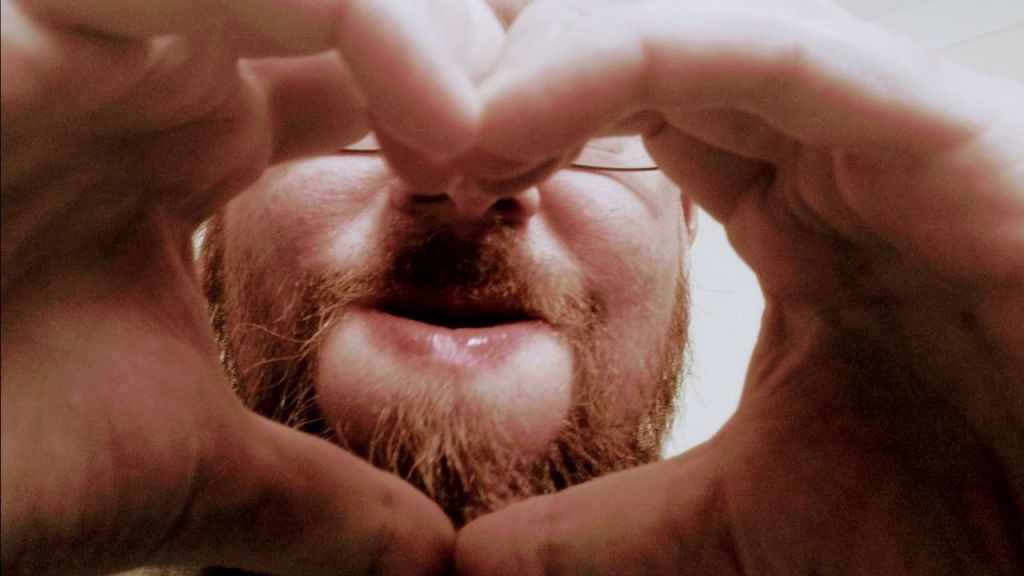
A more subtle, seemingly innocent, political sign used at the contest is the heart-shaped fingers (pictured above)
It was once used by Gareth Bale to celebrate a goal, he even tried to copyright it! But it’s now used across social media, seemingly as a gesture of friendship, but overwhelmingly used by Korean (not the DPRK) pop stars and supporters of Ukraine. It is an insidious symbol made to look innocent through it’s use by children who don’t know any better.
To quote Thomas Mann (who would have loved Eurovision as a gay social Democrat and anti-communist)
“Everything is politics”
If you think that Eurovision is not political then you must either be easily swayed by soft neo-imperialist propaganda or an active participant in the spread of it.
Chris Haws
May 2025
 Class Consciousness Project
Leave a comment