
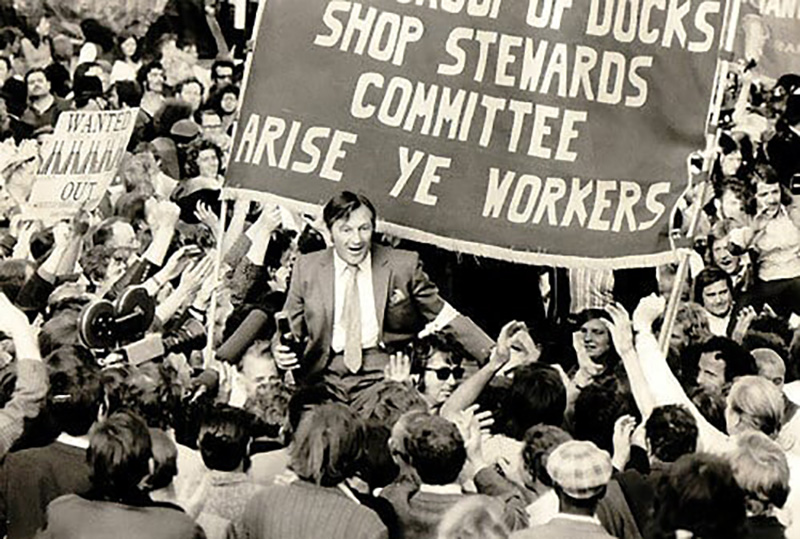

“Under socialism, the event wouldn’t be a liability to manage, but a celebration for the people, by the people”
What should have been a day of celebration turned into disaster. The headlines should’ve been full of jubilant Liverpool fans watching the team parade the Premier League trophy through the city. Instead, people were glued to social media as footage emerged of a man driving through crowds, injuring 79 people — including a father and his young son. The day had always been expected to be busy, but that such an incident was even possible is damning. To make matters worse, getting out of the city afterwards was near-impossible, as the transport system all but collapsed.
On Sunday 25th May, Liverpool Football Club lifted the Premier League title after a flat performance (not that it mattered to the fans) in a 1-1 draw against Crystal Palace. The result was irrelevant. Liverpool had already sealed the league weeks earlier with a 5-1 demolition of Tottenham Hotspur. The celebrations after that game were immense. Anfield was at full capacity (61,276), and thousands more gathered outside. Local fans without tickets joined those who had travelled from further afield. The ground was bouncing. People climbed shops and signage, the streets were packed, and the pubs were like sardine tins. Easily over 80,000 were in and around the ground. All of it spontaneous, unorganised, and without any certainty of a title that day. That should have given a clear warning of what to expect when the official parade was announced.
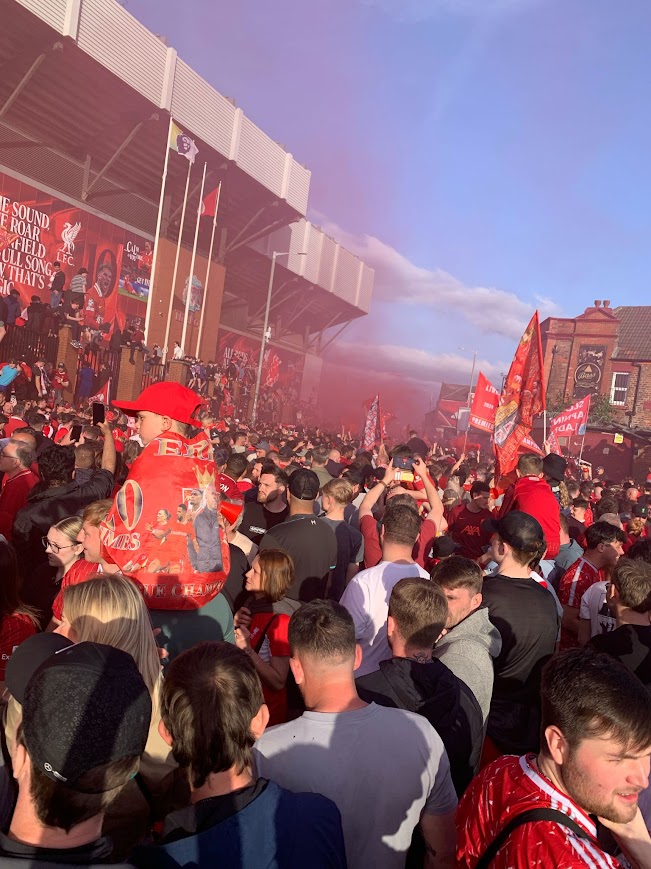
Parades are commonplace when clubs win major honours. The triumphant players take an open-top bus through the city as fans line the route. Liverpool, a city that lives and breathes football, always draws massive crowds for such events. The week before Everton held their own emotional send-off at Goodison Park, the last match at their historic ground. The streets around Goodison were filled. That alone could’ve warned the authorities that the Liverpool parade could be as big as it was.
This was the first chance for fans to celebrate a league title properly. The 2019/20 victory had been denied to them due to COVID lockdown restrictions. This time, it seemed people were determined to do it right and they did. Over one million people are estimated to have lined the route. I was there myself, with my family. We weren’t in the city centre, but even along Queens Drive, the crowds were overwhelming. I carried my youngest on my back the entire time just to keep him safe.

Knowing this, you’d expect robust safety measures. Yet a 53-year-old man, reportedly high on drugs, was able to follow an ambulance through a temporarily lifted barrier and drive into the crowd. He injured 79 people, 55 of whom were hospitalised. 11 ended up in critical care.
There’s a lot to unpack. First, the reaction. In today’s climate of media-driven fear and anti-immigrant hysteria, the first reaction from many was to label it a “terrorist” attack. Social media was swamped with claims that a “Muslim extremist” had struck the parade. I’ve written previously about what deadly events these kinds of false claims can lead to, only recently a group of builders were attacked due to rumours of child abduction.
But the driver wasn’t a foreigner or a terrorist. He was a white British man, high on drugs. He was able to follow an ambulance through a roadblock. Released fans mobile phone footage shows him being confronted by members of the crowd. One man kicked the back window of his car, at which point he reversed, knocking him over. More of the crowd then descended on the car, but he accelerated straight into the densely packed road. Whether this was intentional or an act of reckless panic is still being investigated. But regardless of motive, the consequences were catastrophic.

The rhetoric dominating the press today is rooted in fear. Fear of the “scary brown people” arriving by dinghy to take our jobs, claim benefits, abduct children and commit terrorist attacks. This hysteria has long been the stock-in-trade of Britain’s far-right, but it’s now being mainstreamed by Reform and echoed by Keir Starmer and the Labour Party. Labour, of course, has never not been a racist party — it simply packages its racism when the consensus allows. Now, all bourgeois parties, and some left of imperialism parties, compete over who can appear tougher on migration, knowing full well that they do not seek to stop immigration at all. Reform even say so in their “contract” that they will continue to invite foreign labour for certain sectors. Essentially, they know that the the real threat to working-class safety isn’t foreigners, it’s the capitalist system, it’s profit by all means, and the systemic failures that put 79 people in hospital at a victory parade.
The real issue is the organisational failure that allowed this to happen. As The Independent noted, the incident was entirely preventable. Water Street, where the crash occurred, was supposed to be fully closed to traffic. So too was The Strand, the road where the bus parade ended. Dale Street, leading onto Water Street, was only partially closed — allowing limited traffic. The driver managed to travel 0.2 miles through supposedly sealed-off roads without being stopped.
Responsibility for managing the crowds and traffic on the day fell to Symphotech Event and Safety Ltd. The company had recently entered liquidation, citing pandemic-related financial difficulties. While technically no longer functioning as a business, Symphotech claimed it was committed to fulfilling remaining contracts — one of which was the Liverpool parade. How a defunct company was allowed to manage safety at an event attended by over a million people is a question that needs answers.
Further scrutiny falls on LFX Events Ltd, which was awarded a £25,000 contract by Liverpool City Council for “event safety management”. The Council described it as a “structured tendering process”, but the details, including how much was made in total, remain undisclosed. That alone should raise eyebrows, especially when one considers the wider history of Liverpool City Council’s relationship with contract procurement. Former Mayor Joe Anderson, who oversaw many such decisions, was arrested and is in the process of being charged with bribery and misconduct in public office. This formed part of the broader investigation detailed in the Max Caller Report, which found deep-rooted incompetence, corruption, and intimidation to be standard practice within the council.
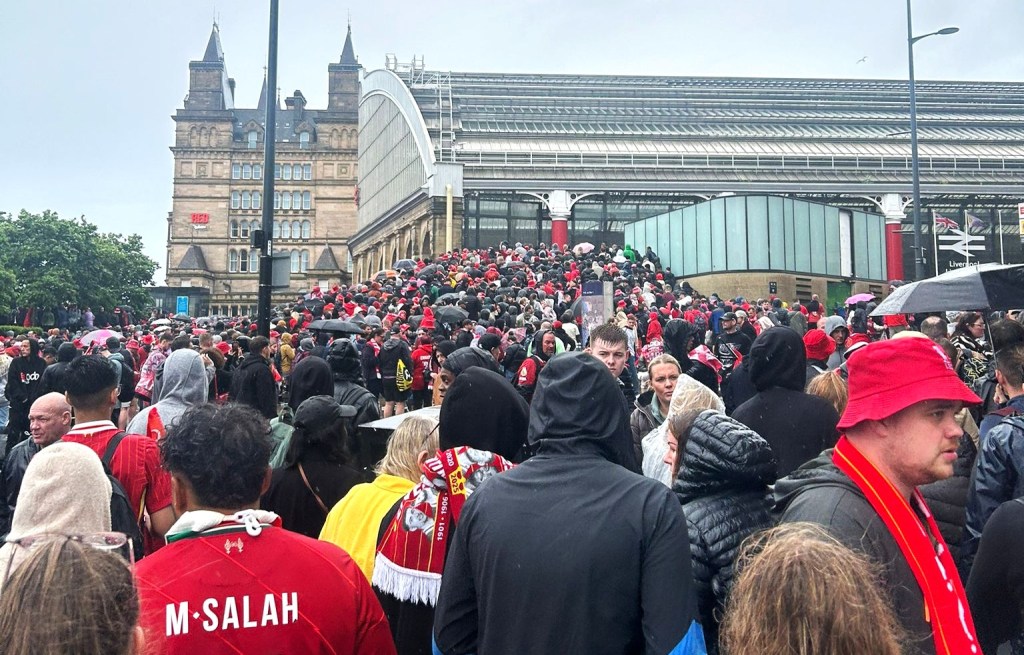
Transport provision proved to be another disaster. As the parade ended, an estimated million, or more, people were left to find a way home. Buses bypassed crowds out of fear they’d be overwhelmed. Trains were dangerously overcrowded. People waited for hours to find space, if they found any at all. No contingency plan was in place. Local charities, hoteliers, and ordinary residents stepped in, offering shelter, lifts, or spare rooms to stranded fans. The council and event organisers were nowhere to be seen.
Incidents like this are not isolated failures — they are systemic symptoms of the failures of the capitalist system. The entire structure of event management under this system is dictated by profit. Contracts are decided by cash and under-the-table-handshakes, rather than capability. Safety is a calculation based on cost, not necessity. We’re not absolving the man who drove the car, his actions were dangerous and criminal, but in any mass gathering there will always be risk. The point is that adequate safety requires the best personnel, infrastructure, and planning, all of which are incompatible with the drive for private profit.
If this had been a royal event, or a business summit, you can be sure the security would have been watertight. Every barrier would be reinforced. Every exit planned. Every pound spent. The ruling class will pull out all the stops to look after their own, but for the working class, the people whose labour makes everything possible, the message is clear: you’re on your own.
Under socialism, this wouldn’t be the case. In a planned economy, such events would be organised by and for the workers. The resources would be allocated not to maximise profits, but to ensure safety, enjoyment and success of the event. An event that would belong to the people, not to a council caught up in corruption or a liquidated firm looking to save face. Organisation and productivity would replace chaos and profiteering. The whole city would work as one to make the day what it should have been: a celebration.

 Class Consciousness Project
Leave a comment