
The fairy tale version of British history engaged in by the ruling class will have you believe that this island of ours has gone through a long, sometimes, bumpy, but largely peaceful evolution towards the bright and sunny world of “parliamentary democracy” that we are all supposed to enjoy today. What history, as told us by the capitalist class, will always fail to teach each generation though is not only was each move in a more democratic direction that was bitterly contested but that our current situation shows us quite clearly that we reached the limits of what democracy under capitalism can offer to the working class.
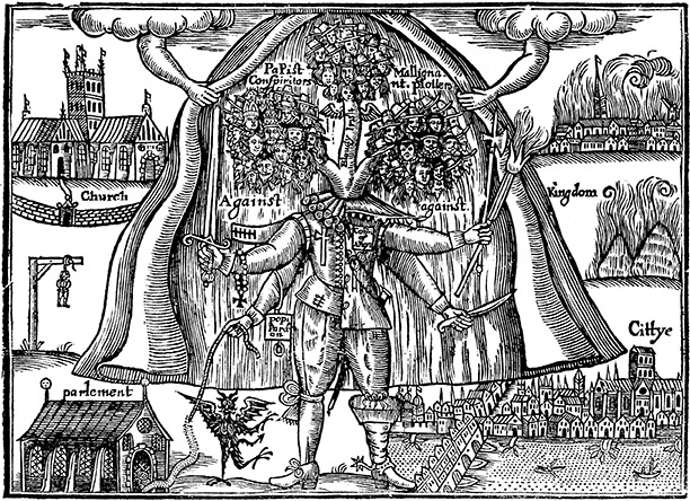
One thing that the British ruling class proven themselves to be particularly skilled at is in keeping the form of ancient institutions (Houses of parliament, Church of England and monarchy) whilst fundamentally changing their content. The battle waged by the capitalist class against the absolute monarchy of the Stuart dynasty in the 17th century did in fact mark a dramatic break in English history and was part of a century where the capitalist class forced the aristocracy to first share power then cede power to the capitalists entirely. This was achieved through the years of the English Civil War and revolution which became necessary to the rising capitalist class when they found their ability to do business restricted by the monarchy and aristocracy. As the great historian Christopher Hill notes in his book ‘Century of Revolution’, the early capitalist class found the constant levying of taxes and declarations of state monopolies over profitable industries like the wool trade to be an impossible imposition. It was this experience of the King’s government being able to impose taxation without representation (to take a phrase from the later American Revolution) and also imprisoning bourgeois leaders at will. Having tried to bargain with King Charles I over many years the English capitalist class were forced into armed rebellion in 1642. Having started the war the capitalist class were then forced to create a professional army that would also be ideologically committed to the case of defeating the King. This saw the creation of the New Model Army which was a truly revolutionary act as this marked the first time that a truly centralised army was raised in this country, given that all previous armies were tied as much to regional aristocrats and were also strictly temporary affairs with men pressed into service for a limited time. The New Model Army had within its ranks many radicals influenced by groups such as the Levellers and Diggers. The radicals built a powerful base for themselves in the New Model Army and this led to them being able to present their demands to Cromwell, Ireton and Fairfax (the leaders of the army) in debates at Putney after the conclusion of the first phase of the civil war in 1647. At these debates Colonel Thomas Rainsborough put the case of the revolutionary army officers to the commanders:
“for really I thinke that the poorest hee that is in England hath a life to live as the greatest hee; and therefore truly, Sir, I thinke it’s clear, that every man that is to live under a Governement ought first by his owne consent to put himself under that Governement; and I do think that the poorest man in England is not at all bound in a strict sense to that Government that he hath not had a voice to put Himself under.”
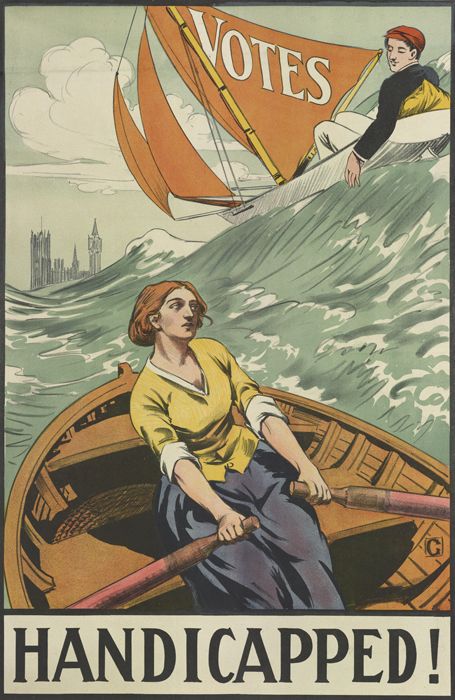
Rainsborough and his comrades were putting forward the most radical position of the Levellers, that there should be universal manhood suffrage. This was of course totally rejected by the likes of Cromwell who (as a landowner) feared what would happen if the propertyless masses were able to have their own representatives in the House of Commons. The leveller leaders were defeated at that time but their demand for universal manhood suffrage survived to be taken up by later generations of radicals. The next wave of working class revolt also raised the old leveller demand of universal manhood suffrage. This came at the end of the Napoleonic wars following the imposition of brutal hyper exploitation in the factories and farms during the long period of wars waged by the British ruling class against the French. The revolt of the working class saw strikes, mass meetings and open confrontations with the state forces. This culminated in the massacre at St Peters Field in Manchester where a mass rally to be addressed by radical MP Henry Hunt was attacked by the local yeoman cavalry leading to 19 deaths and 400 injuries. This crushed the movement of the time but the class struggle continues regardless of how much repression the ruling class unleash. The demand for universal male suffrage returned with the Chartist movement of the 1840’s. The British ruling class started to concede to this demand, bit by bit from 1832 where they passed a small extension of the franchise and further extensions were passed in 1867, 1884, 1918 and the final extension came in 1928 with the passing of equal voting rights for women free from property qualifications.
The concessions were made slowly in order to try and stop a unified movement of the working class developing. As soon as the working class gained a foothold within the bourgeois parliament great efforts were made to ensure that there were safeguards in place for the ruling class which were designed to prevent the working class gaining too much influence over what they regarded (correctly) as their state machine. Thus we have the huge influence of the civil service which is designed to be a bulwark against elected governments, there is also the unaccountable power of the military and intelligence chiefs which no government has ever seriously tried to tackle then we have the totally undemocratic House of Lords which is another institution dedicated to blocking anything which could seriously threaten the interests of the ruling class. The Levellers and the Chartists thought that by winning the right to vote and being represented in the House of Commons would secure justice for the working class and be a safeguard of our class interests. The truth is though that the ruling class has long since found ways to subvert the concessions that have been made over the right to vote. Now we have parliamentary chambers which are entirely unimportant as all major decisions are made elsewhere with the outcome being decided long before a token vote is held in parliament. That is why workers must move beyond bourgeois parliamentarism. It was a radical demand to seek to gain the vote in the 1640’s or 1840’s but the ruling class has demonstrated that no matter if the whole working class does have the right to vote in bourgeois elections as they control state policy regardless of which party gets to form the government. We must realise that this democracy is not really for us, it is a democracy for the capitalist class within which they have allowed us a small, tokenistic walk on part. It is still their system and so we must raise the demand for proletarian democracy, to establish the dictatorship of our class and the dismantling of theirs. It is no longer a case of wanting to reform the system but of us needing to tear down the whole thing.
 Class Consciousness Project
Leave a comment