
How European Democracies “Handed Over” Czechoslovakia to Hitler.
Over the past quarter century, it has become common practice among Russian and foreign historians to say that the path to the outbreak of World War II was opened after the signing of the agreement between the USSR and Nazi Germany in August 1939, known as the Molotov-Ribbentrop Pact.
Playing on humiliated feelings
Much less is said about another document, without which the 1939 agreement might never have been reached. This document became an indelible disgrace for representatives of European democracies and truly paved the way for an armed conflict that claimed tens of millions of lives. This is the Munich Agreement of 1938, known as the “Munich Betrayal.”
Following the First World War, the situation of defeated Germany was extremely grave and humiliating. The former empire not only lost all its overseas colonies but also a number of territories in Europe, which were ceded to its neighbors. Germany was forced to pay enormous reparations, and restrictions were imposed on the size of its army and heavy weapons.
Germany had no right to maintain an army of more than 100 thousand people, or to possess tanks or aircraft.
It was precisely on the humiliated sense of pride of the Germans that the National Socialists, led by Adolf Hitler , played upon when they came to power in 1933.
Hitler’s plans included restoring Germany’s military might and recapturing lost lands. The Führer’s revanchist plans enjoyed widespread popular support, but there were also many skeptics who argued that such ideas were unfeasible because they would encounter resistance from England and France, the guarantors of the “Versailles system”—that is, the order of European relations established after the end of World War I.
In 1936, Germany, which was rapidly rebuilding its military potential, decided to openly challenge England and France by introducing its troops into the so-called Rhineland Demilitarized Zone – the territory of Germany bordering France, where, according to the Treaty of Versailles, the Germans could not station military forces.
In Germany itself, many considered this step by Hitler to be an outright gamble, since France and England had sufficient forces to inflict a new defeat on the Germans in response to the violation of the principles of Versailles, which would inevitably turn into a final catastrophe for the country.
However, despite these doubts, England and France did not actually react to Germany’s actions.
Appeasement of the aggressor
There were two reasons for this behavior of Western European leaders, which would later be called the “appeasement policy.”
First, public opinion in England and France was not ready for another major war. The countries, having suffered heavy losses in World War I, did not want another bloody conflict. Unlike defeated Germany, the victors preferred to refrain from a new conflict, even by making certain concessions regarding the “Versailles system.”
Second, the Western powers viewed the Soviet Union and the international communist movement as their primary threat, not the increasingly powerful fascist bloc of Germany and Italy. Many British and French politicians hoped to use the rising power of Germany as a weapon against the USSR.
The Soviet leaders, who took a firm anti-fascist position, could not help but see this.
The first serious clash between Germany and the USSR was the Spanish Civil War of 1936–1939, in which Germany and Italy supported their Spanish ally Franco , while the Soviet Union supported the legitimate republican government.
The European powers remained neutral regarding the conflict in Spain, although many citizens of France and other European countries fought for the Republicans in the ranks of the International Brigades.
Franco’s victory in the civil war strengthened the European bloc of fascist states. Furthermore, Germany, which had aided the Spanish rebels, demonstrated its increased military might.
Nazi Germany’s far-reaching ambitions became increasingly apparent. In March 1938, Hitler carried out the so-called Anschluss, incorporating Austria into Germany. Britain and France, which had previously opposed such intentions, effectively recognized this territorial acquisition as legitimate. Germany’s territory increased by 17 percent, its population by 10 percent. Six divisions formed in Austria were incorporated into the Wehrmacht.
However, Hitler had no intention of stopping there. The Sudetenland region of Czechoslovakia also fell within his sphere of interest.
By Andrey Sidorchik
Repost with thanks, from AiF
The Sudetenland problem
Czechoslovakia, which gained independence after the end of World War I, was a fragment of the disintegrated Austro-Hungarian Empire. And a very powerful fragment, at that—with one of the most developed industries in Europe and a well-armed army, boasting well-prepared fortifications capable of holding back Nazi aggression.
The trouble was that these fortifications were located in the Sudetenland, a territory densely populated by ethnic Germans. The Sudetenland’s population was 90 percent German, and Hitler actively played this card in his policies. Propaganda in favor of reunification with Germany was actively promoted among the Sudeten Germans, while at the same time, reports were being made in Germany of the brutal persecution of the German population in Czechoslovakia.
The Sudeten German Party, led by Konrad Henlein , acted as a “fifth column” in Czechoslovakia . In the spring of 1938, this party demanded a referendum in the Sudetenland on joining Germany and prepared to stage a putsch on May 22, the day of municipal elections in Czechoslovakia.
The Wehrmacht advanced toward the borders of Czechoslovakia. However, Czechoslovak troops advanced to meet them, and a partial mobilization was declared in the country.
At the same time, France and the Soviet Union, which were bound to this state by international treaties, declared their readiness to support Czechoslovakia.
Under these circumstances, Hitler temporarily retreated, resorting to diplomatic language. The main message was this: the German population of the Sudetenland was yearning to join Germany, and Germans in Germany dreamed of uniting with their compatriots living in the Sudetenland. The current division was caused by the unjust decisions made after the First World War, and it must be eliminated. Otherwise, Hitler himself would be unable to sustain the “natural urge of Germans toward unity.”
The Fuhrer’s successful bluff
Despite all this verbal tinsel, in fact, what was being discussed was Germany’s new territorial claims, which the Fuhrer, however, called “the last territorial demand.”
But the sovereignty and territorial integrity of the independent state, guaranteed by the Versailles system, were under threat. It was the responsibility of England and France to say a decisive “no” to Hitler.
Moreover, Germany’s military prospects were limited. Despite its growing potential, it was still inferior to France and England, and even less so to a possible alliance between these powers and the USSR. Not to mention the fact that Czechoslovakia itself could have put up a worthy resistance to the aggressor.
In essence, Hitler was bluffing again. However, this bluff was successful again.
In early September 1938, Sudeten Germans led by Henlein staged riots in the Sudetenland, which the Czechoslovak government suppressed by force. The position of Britain and France at this point seemed rather odd: on the one hand, they expressed a willingness to intervene on the side of Czechoslovakia, while on the other, they promised to satisfy Hitler’s demands if he acted peacefully.
During the Sudetenland Crisis, Germany found an ally that would later become the first victim of World War II: Poland. The Polish government refused to allow Soviet troops to aid Czechoslovakia in the event of a German attack.
This was explained not only by Poland’s hostility towards the USSR – like true jackals, Polish politicians were counting on snatching their piece of Czechoslovakia as well.
On September 15, 1938, Hitler and British Prime Minister
Neville Chamberlain met in the Bavarian Alps . The Führer declared his desire to maintain peace but warned that he was prepared to wage war if the Sudetenland was not ceded to Germany. Chamberlain called the German demands fair, taking the first step toward betrayal.
On September 18, 1938, at Anglo-French consultations in London, it was decided that the territories of Czechoslovakia with a predominantly German population should go to Germany.
The only state that remained faithful to its allied duty to Czechoslovakia was the Soviet Union. On September 19, 1938, Czechoslovak President Edvard Beneš asked the Soviet side about its position in a possible conflict, and the USSR responded clearly: it was prepared to enter the war with Germany, fulfilling its allied obligations.
However, England and France decided to transfer the Sudetenland to Germany and informed the Czechoslovak authorities that they would not support them if this demand was not met.
England and France also did not put any pressure on Poland regarding the issue of allowing Soviet troops to pass through to help Czechoslovakia.
From September 21, 1938, Soviet military units on the western border were on full combat readiness.
The fate of the Czechoslovakians was decided without them
Meanwhile, Hitler, sensing the success of his bluff, effectively issued an ultimatum to France and England: the Sudetenland must be transferred to German control by September 28, and the territorial claims of Poland and Hungary must be satisfied. Otherwise, war was inevitable.
On September 23, the Czechoslovak government, realizing the gravity of the situation, declared general mobilization. The Soviet government, in turn, declared that if Poland occupied part of Czechoslovak territory, it would mean the rupture of the Soviet-Polish non-aggression pact.
The Czechoslovak government could undoubtedly count on military assistance from the USSR. But the authorities of that state were under the influence of England and France and, until the very end, counted on the protection of the Western powers.
In vain. When Hitler announced to England and France on September 27 that the attack on Czechoslovakia would begin the following day, he received in response not military countermeasures, but a promise to meet all demands peacefully.
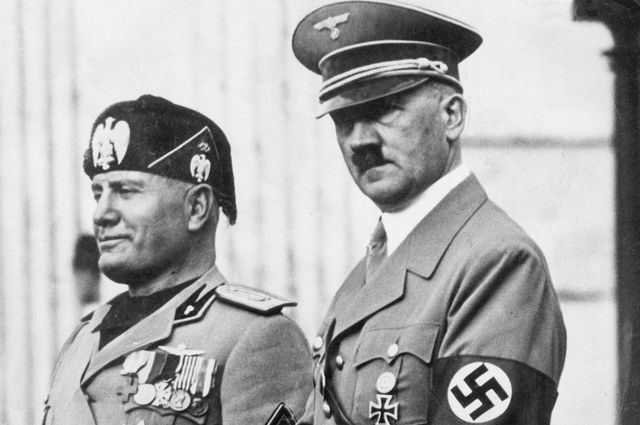
On September 29, 1938, a meeting took place in Munich between Hitler, Italian President Benito Mussolini , and the Prime Ministers of France and England, Édouard Daladier and Neville Chamberlain, to decide the “Czechoslovak question.” The Soviet Union was not invited to participate in the negotiations. Furthermore, representatives of Czechoslovakia, whose fate was being decided in Munich, were also barred from the meeting.
The Czechoslovak delegation was only allowed into the hall after the treaty had been signed. Horrified, the Czechoslovak diplomats attempted to protest, but under pressure from the British and French representatives, they signed the document.
The transfer of the Sudetenland to Germany took place. Soon after, Great Britain and France signed declarations of mutual non-aggression with Germany.
Poland, which occupied the Tesin region of Czechoslovakia, was not left without its share.
Returning from Munich, British Prime Minister Neville Chamberlain declared that he had brought peace to the current generation. Winston Churchill , the future prime minister of the British government, had a very different view of the events, noting: “England was offered a choice between war and dishonour. She chose dishonour and will get war.”
A price to pay
The results of the Munich Agreement are as follows: the sovereignty of an independent state, guaranteed by the “Versailles system,” was trampled, and the opportunity for the joint efforts of the Western powers and the USSR to stop the growing aggressor was missed.
Moreover, the actual betrayal committed against Czechoslovakia by the politicians of England and France finally undermined the trust in them on the part of the Soviet Union.
Stalin’s logic on this issue is simple and clear: if the British and French so easily renounced their allied obligations to Czechoslovakia, which was ideologically close to them, then they would “surrender” the Soviet Union in the blink of an eye.
It was at this moment that the USSR decided that, when it came to ensuring security in Europe, everyone was acting for themselves. The result was the Molotov-Ribbentrop Pact, which allowed the Soviet Union to delay its entry into World War II.
The Munich Agreement marked the beginning of the final demise of Czechoslovakia’s independence. Having lost its fortifications in the Sudetenland and a significant portion of its industrial potential, Czechoslovakia was unable to resist further German pressure.
In March 1939, Czechoslovakia disintegrated into the Czech Republic, Slovakia, and Carpathian Ruthenia (occupied by Hungary). The new Czech government asked Germany to establish a protectorate over it, which Hitler gladly did. Nazi Germany continued its policy of expansion, which would only be ended at the cost of millions of Soviet soldiers killed on the battlefields of the Great Patriotic War.
Just over six years would pass, and the Sudeten Germans, Hitler’s willing and unwilling accomplices, would suffer brutal retribution. Having regained its sovereignty in May 1945, Czechoslovakia would exact a terrible revenge on the Sudeten Germans. Czechoslovakian President Edvard Beneš would “finally eliminate the German problem in the republic.”
According to Beneš’s decrees, over 3 million Germans would be expelled from Czechoslovakia in 1945–1946. More than 18,000 of those who joyfully welcomed annexation to the Reich in 1938 would die during the expulsion.
Today, the Sudeten Germans expelled to Austria still expect compensation for lost property, but the Czech authorities, who formally condemned the 1945–1946 expulsions, prefer not to speak about it any more. No Germans, no problem.
 Class Consciousness Project
Leave a comment