
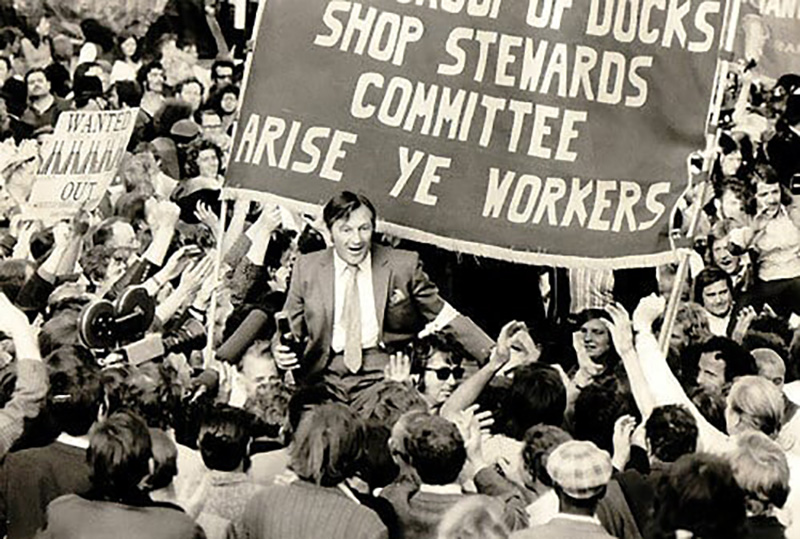
In Football We Must Also Apply A Marxist Analysis
When we look at the dire state of English football today, with a few giant clubs owned by oligarchs dominating everything, many football fans will ask the obvious questions which is, how did this come to be? How did we go from a situation where teams like Ipswich Town or Burnley could be in with a shot of winning the league and there were seven different league winners in the 1960s to there being only three in the first decade of the premier league, seven of these titles going to just one club, Manchester United. As Marxists we know very well that there is never just one cause of any particular event but there are many which converge together to create a new set of relations. Football is no exception to that rule. In this article we are going to focus one the Bosman ruling, one particular aspect of the changes to football in the 1990s which benefitted a few already rich clubs and helped to make football into yet another area of life dominated by monopolies. What we will outline here is how a case that was meant to be about ending the unjust practices of clubs in terms of their right to charge transfer fees for players out of contract turned into something much bigger and with effects that became wholly negative. What it goes to show is that nothing should ever be looked at as an isolated phenomenon even when it comes to sport.
The Bosman Case
The 1995 European Court of Justice ruling in Union Royale Belge des Sociétés de Football Association ASBL v Bosman represents one of the most transformative moments in the history of professional football. This landmark decision, which prohibited transfer fees for out-of-contract players and abolished nationality-based quotas within European Union member states, fundamentally reshaped the economic and sporting landscape of what was once the workers’ game. While initially celebrated as a victory for the rights of players, nearly three decades of evidence reveals that the Bosman ruling has produced numerous negative consequences for English football, particularly in terms of competitive balance, financial stability, youth development, and the cultural identity of clubs.

The Bosman case emerged from Belgian footballer Jean-Marc Bosman’s dispute with his club RFC Liège, which had prevented his transfer to French team USL Dunkerque despite his contract having expired . The ECJ’s ruling was grounded in European Union principles regarding freedom of movement for workers, but its application to professional football has had far-reaching and often unintended consequences that extend well beyond the initial legal framework . The decision effectively created a free agency system for EU players whose contracts had expired, while simultaneously prohibiting any limits on the number of EU nationals that clubs could field . While these changes initially appeared to empower players, they ultimately shifted the balance of power toward wealthier clubs and created structural imbalances that continue to challenge English football today.
Player Wage Inflation
One of the most immediate and pronounced negative effects of the Bosman ruling has been the exponential growth in player wages, which has dramatically altered the financial structure of English football. Prior to the ruling, clubs maintained significant leverage in contract negotiations because they could demand transfer fees even for out-of-contract players. This mechanism naturally suppressed wage demands to some extent, as players could not simply leave without compensation to their club . After Bosman, players gained unprecedented bargaining power, with the ability to leave for free at contract expiration, leading to massive increases in salaries and signing-on fees as clubs attempted to retain or attract talent.
The economic data reveals this dramatic shift: between 1997 and 2002, the wage-revenue ratio in English football increased from 47.0% to 62.4%, with average annual wage growth of 26.5% far outstripping revenue growth of 19.5% . This trend has continued in subsequent decades, with top Premier League players now commanding salaries that would have been unimaginable pre-Bosman. This wage inflation has created severe financial pressures throughout the football pyramid, with many clubs operating at unsustainable losses despite record revenues .
Transfer Fee Hyperinflation and Speculative Practices
Paradoxically, while Bosman eliminated transfer fees for out-of-contract players, it simultaneously triggered hyperinflation in fees for players still under contract. Clubs fearful of losing valuable assets for nothing began demanding higher fees for contracted players, particularly those with long durations remaining on their agreements . This has led to a spectacular increase in transfer spending, which rose from €403 million in 1994-95 to €8 billion in 2017-18—a 20-fold increase from the pre-Bosman era .
The ruling also encouraged speculative practices in the transfer market, with clubs increasingly treating players as financial assets rather than sporting investments. Many clubs now prioritise resale value before contractual expiration, leading to a constant churn of players and the undermining of team stability . The practice of signing players to long-term contracts primarily to preserve future transfer value rather than for sporting reasons has become commonplace, representing a fundamental shift in club priorities that has further commercialized the sport.
Financial Polarisation Between Clubs
The Bosman ruling significantly accelerated financial polarization between elite clubs and the rest of the football pyramid in England. Wealthier clubs with greater resources could offer higher wages to attract the best talent, while smaller clubs lost the vital transfer fee revenue that had previously provided financial stability when players left . This created a self-reinforcing cycle where economic advantages translated into sporting success, which in turn generated more revenue, further widening the gap between clubs.
This financial polarization is particularly evident in the uneven distribution of resources within English football. According to UEFA statistics, 90% of salary increases, 85% of transfer fees, and 75% of profits in European football are now attributable to the five main leagues, with the Premier League dominating even within this elite group . The elimination of transfer fees for out-of-contract players particularly harmed smaller clubs that had historically relied on developing talent and selling them for fees that supported their operational budgets .
Domestic League Inequality
The Bosman ruling fundamentally undermined competitive balance in English football by enabling wealthier clubs to hoard playing talent. Before the decision, nationality quotas and transfer fee requirements created natural barriers that prevented extreme concentration of talent . The abolition of foreign player restrictions allowed wealthy clubs to recruit globally rather than nationally, creating squads with depth and quality that smaller clubs simply cannot match . This has led to increasing predictability in domestic competitions, with the Premier League title effectively limited to a handful of financially elite clubs in recent decades.
The gradual monopolization of success is evident in the patterns of league winners since 1995. In the 26 Premier League seasons following Bosman, only six clubs have won the title, with Manchester United, Chelsea, Manchester City, and Arsenal accounting for all but one of these championships . This represents a significant decrease in competitive balance compared to the pre-Bosman era, when a more diverse array of clubs could compete for top honors. The increasing financial stratification means that matches between top and bottom clubs have become increasingly predictable, potentially undermining the sporting excitement that comes from uncertainty of outcome .
European Competition Monopolisation
The concentration of talent has similarly affected European competitions, creating what some analysts have termed a “closed shop” at the highest level of continental football. Since the Bosman ruling, more than half of the Champions League editions have been won by just three clubs . This dominance by a super-elite of wealthy clubs has made it increasingly difficult for English clubs outside this group to compete meaningfully in Europe, further reinforcing the financial and sporting advantages of the established elite.
The European competitive landscape has become characterized by persistent inequality, with the same clubs consistently reaching the latter stages of tournaments year after year. This phenomenon is directly linked to the free movement of players enabled by Bosman, which allows wealthier clubs to systematically recruit the best talent from smaller competitors across Europe . The ruling thus effectively created a continental talent drain from smaller leagues and smaller clubs within major leagues toward the elite clubs in the richest leagues, particularly the Premier League .
Reduced Opportunities for Local Players
The abolition of nationality quotas has dramatically reduced opportunities for English players in the Premier League. Before Bosman, the “3+2” rule limited foreign players in European competitions, ensuring substantial opportunities for domestic players . The removal of these restrictions led to an influx of foreign talent, inevitably reducing playing time for English players at the highest level. The average share of foreign players in Premier League squads increased from 18.6% in 1995-1996 to 66.4% in 2015-2016 , representing a dramatic transformation in squad composition that has marginalized local talent.
This shortage of opportunities for English players has created a development bottleneck that arguably harmed the national team for many years. While recent Premier League teams have featured more English players due to homegrown player rules and improved academy development, the period immediately following Bosman saw a significant decline in English representation at the highest level of club football . This reduction in playing opportunities for domestic talent at the most competitive levels potentially impaired the development of English players, though this effect has been partially mitigated by other factors in recent years.
Underinvestment in Youth Academies
The Bosman ruling altered the economic calculus of youth development for many clubs. Before the decision, clubs could expect to receive transfer fees even for academy graduates who left at the end of their contracts, providing financial incentive to invest in youth development . Post-Bosman, clubs risked losing their investments for nothing if players declined to renew their contracts, potentially reducing the economic return on academy investments.
This dynamic has particularly affected smaller clubs that had traditionally relied on youth development as a strategic advantage. While the most successful academies have continued to thrive, the economic risks associated with developing players who might leave for free has arguably led to underinvestment in youth development throughout much of the football pyramid . The increasing trend of wealthy clubs “hoarding” young talent through extensive academy networks further illustrates how Bosman has reshaped development economics in English football .
Erosion of Local Identity and Club Character
The massive influx of foreign players following Bosman has gradually eroded the local identity and distinctive character of many English clubs. Before the ruling, teams maintained stronger regional and national identities, with squads predominantly featuring domestic players . This strengthened the bond between clubs and their communities, creating a sense of shared identity that transcended mere sporting success. The post-Bosman transformation into multinational squads with few local connections has arguably diluted this special relationship between clubs and their communities.
The cultural transformation has been particularly evident in the composition of teams. On Boxing Day 1999, Gianluca Vialli’s Chelsea became the first English side to field an entire XI of foreign players . Since then, 152 starting XIs in the Premier League have not included a single British player, while no side has started eleven Englishmen . This statistic illustrates the dramatic demographic shift that has occurred since Bosman, raising questions about the connection between clubs and their national roots.
Fan Disconnect and Commercialization
The globalization of playing squads has contributed to a sense of disconnection among some traditional fans, who find it increasingly difficult to identify with multinational squads featuring few local players. This disconnect has been exacerbated by simultaneous trends toward commercialization and rising ticket prices, which many critics link to the increasingly corporate nature of top-level football . As clubs have transformed into global brands, some traditional supporters have felt increasingly alienated from institutions that once functioned as community pillars.
The financial implications of Bosman have directly contributed to this commercialization trend. As noted in one analysis, “The cheapest adult season ticket of Arsenal costs no less than 1,073 pounds at present. Ticket prices of other English top clubs are also very high nowadays” . This price inflation is partially attributable to the increased player costs that followed Bosman, as clubs passed on their higher expenses to consumers in the form of increased ticket prices and merchandise costs.
Regulatory Failure and Alternative Measures
The Bosman ruling effectively tied the hands of football authorities regarding potential regulatory responses to competitive imbalance. Prior to Bosman, nationality-based quotas provided one mechanism for maintaining competitive balance and protecting opportunities for domestic players . The ECJ’s decision eliminated this tool without providing effective alternatives, creating a regulatory vacuum that has proven difficult to fill through other measures.
Football authorities have attempted to address these imbalances through mechanisms such as Financial Fair Play and homegrown player rules, but these have proven largely inadequate to counter the structural advantages created by Bosman . The ruling fundamentally altered the balance of power in European football in ways that have proven difficult to mitigate through subsequent regulation, particularly because any regulatory response must operate within the EU legal framework that produced Bosman in the first place.
Unintended Consequences and Power Imbalances
The Bosman ruling has produced numerous unintended consequences that have fundamentally reshaped English football in ways that extend far beyond the initial legal issue of transfer fees for out-of-contract players. The decision has accelerated the financialization and commercialization of the sport, transformed player-club power dynamics, and altered the very structure of competitive balance in ways that arguably contradict the original intent of European free movement principles .
Perhaps most significantly, Bosman ultimately strengthened the leverage of already powerful clubs while weakening smaller competitors. As one critic noted, “The larger football clubs are, and have been, successfully using their power to prevent UEFA from implementing measures for improving competitive balance (to a serious extent). The reason is that they want to become stronger on the pitch themselves, which also implies that they get more market power in consumer markets and can charge higher prices there” . This dynamic has created a self-reinforcing cycle of advantage for elite clubs that has proven difficult to break.
Assessing the Bosman Legacy
Nearly three decades after the landmark decision, the Bosman ruling has produced a complex legacy in English football that extends far beyond its initial legal framework. While the decision undoubtedly benefited some top players through increased mobility and higher compensation, these gains came at significant cost to the overall health of the football ecosystem. The ruling accelerated financial polarization, undermined competitive balance, reduced opportunities for local players, altered club identity, and created structural advantages for elite clubs that have proven difficult to mitigate.
The negative effects of Bosman have been particularly pronounced in English football due to the Premier League’s unique commercial power and global appeal. The combination of Bosman-induced mobility and the Premier League’s financial might created a perfect storm that has increasingly concentrated talent among a small group of elite clubs . This concentration has arguably reduced competitive balance both domestically and in European competitions, potentially undermining the uncertainty of outcome that constitutes a fundamental element of sport’s appeal.
Addressing the negative consequences of Bosman remains a formidable challenge for football authorities, particularly following Brexit, which has partially reversed the application of the ruling in England by subjecting EU players to the same work permit requirements as other foreign players . However, the fundamental structural imbalances created by Bosman remain deeply embedded in the football ecosystem. Future reforms must carefully balance the legitimate rights of players with the need to maintain competitive balance, protect youth development, and preserve the cultural identity that makes football more than mere entertainment.
The only real way we can address the problems created by the Bosman ruling is to take a holistic approach to analysing football. The central problem is that what was once a game for workers has become a plaything for the ultra rich. Football teams are part of what gives cities and regions their identity, they go beyond sport into something much higher. To protect that will require the strength of working class fans to be asserted over clubs by establishing proper democratic control and ending the ability of oligarchs to acquire our clubs, often whilst using loans from the banks which are then loaded onto the debts of the club concerned. The Bosman ruling occurred at a time when the power of the working class across Europe was on the retreat and the power of the monopoly capitalists was rising exponentially. This is what has led to the current situation in football and is a reminder that we can never separate sport from wider questions posed by the class struggle.
Sources Used
- https://cjel.law.columbia.edu/print/1999/the-bosman-case-the-relationship-between-european-union-law-and-the-transfer-system-in-european-football/
- https://www.lawteacher.net/free-law-essays/sports-law/dissertation-pre-bosman-and-beyond.php
- https://www.lawteacher.net/cases/bosman-case-summary-4097.php
- https://www.europarl.europa.eu/doceo/document/E-10-2024-001859_EN.html
- https://www.skysports.com/football/news/11096/10100134/how-the-bosman-rule-changed-football-20-years-on
- https://www.economicsobservatory.com/how-might-brexit-affect-the-english-premier-league
- https://verfassungsblog.de/football-transfer-system/
- https://www.unilim.fr/ebooks/482
 Class Consciousness Project
Leave a comment