
The Workers Movement Must Fight For Democratic Rights
The recent detention of Workers Party leader George Galloway (together with his wife) upon his return to the UK via Gatwick Airport has ignited a fierce debate about the state of free speech in Britain. While officially released without charge, his temporary hold under Schedule 7 of the Terrorism Act 2000 is seen by many not as an isolated incident, but as the latest escalation in a decades-long erosion of democratic rights.

The instrument in question—the Terrorism Act—was passed in 2000, a full year before the September 11th attacks. At the time, the Blair government assured the public it was a necessary, sparingly used tool that would not infringe upon democratic rights. Critics warned it was a dangerous overreach. A quarter of a century later, those warnings carry a chilling new weight.
In recent years, both Conservative and Labour governments have been accused of using such powers to clamp down on criticism, particularly regarding UK policy towards Israel. The case of Galloway—a prominent, vocal critic of the government—being detained for his political statements sets a concerning precedent. The Act’s potential, raised even by Liberal Democrat MPs at its inception, to criminalise forms of industrial action and peaceful protest is now being realised, as seen with groups like Palestine Action.
The True Target of Anti-Terror Laws?
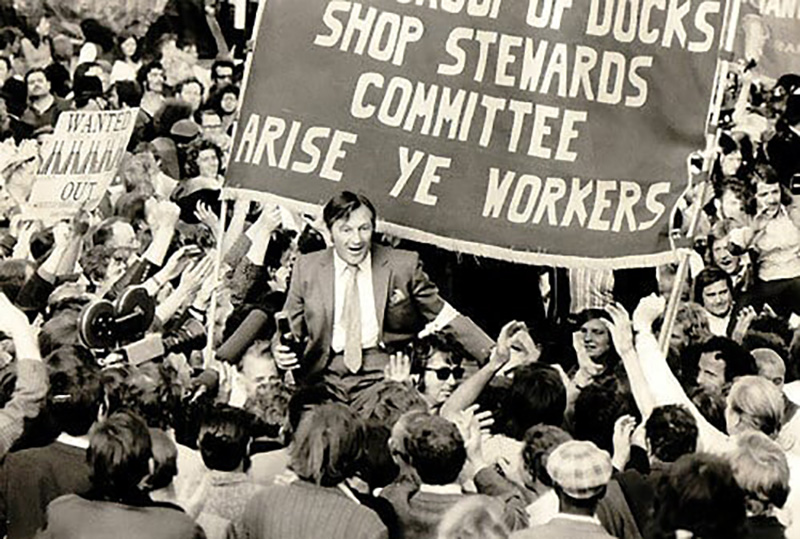
The argument follows that the true target of this legislation was never the “Islamic terrorist” bogeyman, but the working class and its movements. The ability to detain individuals arbitrarily for their political speech strikes at the heart of the rights to free speech and assembly—rights for which working-class martyrs from the Peterloo Massacre to the Tolpuddle Martyrs and the Chartists fought and died.
Yet, the response from the official trade union movement has been described by some as feeble. This is seen as a profound betrayal of a proud history of challenging repressive laws. Britain already has some of the most restrictive anti-union laws in Western Europe, and the fear is that anti-terror legislation will now be wielded to further shore up the position of government and employers, branding legitimate dissent as “terrorism.”
A Slippery Slope
The detention of George Galloway, while temporary, is a potent symbol. If a former MP and prominent media figure can be detained simply for views he has expressed, what protection does an ordinary trade unionist or protester have? Today, it’s a few hours of detention; tomorrow, it could be days. This is a slippery slope.
The call is now growing for a unified defence of fundamental freedoms. The demand is not only for the repeal of anti-union laws but also for the removal of “anti-terrorism” laws that have now revealed their true purpose. The right to criticise the government, to free assembly, and to speak freely are not abstract concepts; they are the hard-won liberties that our union ancestors suffered greatly to win for us. To surrender them without a fight is to dishonour the blood shed by those who came before us in this struggle
The trade union leaders must be forced to act on this core issue of working-class interest. And if they will not, the message is clear: they must be pushed out of the way.
 Class Consciousness Project
Leave a comment