

I’ve wondered about this subject for a while, and the following are my thoughts.
The first time I thought about ‘working class’ in a way that went beyond people who work in factories and spent their lives trying to earn enough to keep the bills and debts at bay, while putting clothes on backs and food on the table, was when a shop steward brother and member of a prominent Socialist group explained that ‘class’ wasn’t just where you were from, but a state of mind.
At the time I thought this was really profound, but I was a teenager coming to grips with the harsh reality of working-class existence. I hate explaining my background because it feels like I’m trying to prove working-class credentials, but it’s not that. There’s plenty of pain to go around, and everyone has their share. But this outline is an attempt to explain how I came to the views I hold.
I was the seventh child of an Irish immigrant father and a first generation Irish immigrant mother, both of whom worked in industry all their lives. By the time I was 15 my dad had survived throat cancer, without his voicebox, but was then invalided out of work for the rest of his life, a brother had committed suicide in the British Army in Ireland, and a sister was being battered by her husband. Oh yeah, and I had been charged with Grievous Bodily Harm. That fifteenth year didn’t go so well, and although I passed the 11plus four years earlier, I decided that Cardinal Allen Grammar school wasn’t for me.

I have written elsewhere quite an emotional piece you can read here and although it sounds a bit dramatic it is true. ‘I couldn’t decide between Slade and T Rex but did decide the Communist Manifesto spoke for me.’
After reading Marx along with The Ragged Trousered Philanthropists, the most positive contribution I thought I could make was to join a union and be part of the fight to change society. So a meeting with headmaster Canon Kieran about my future in the Grammar school didn’t go well.
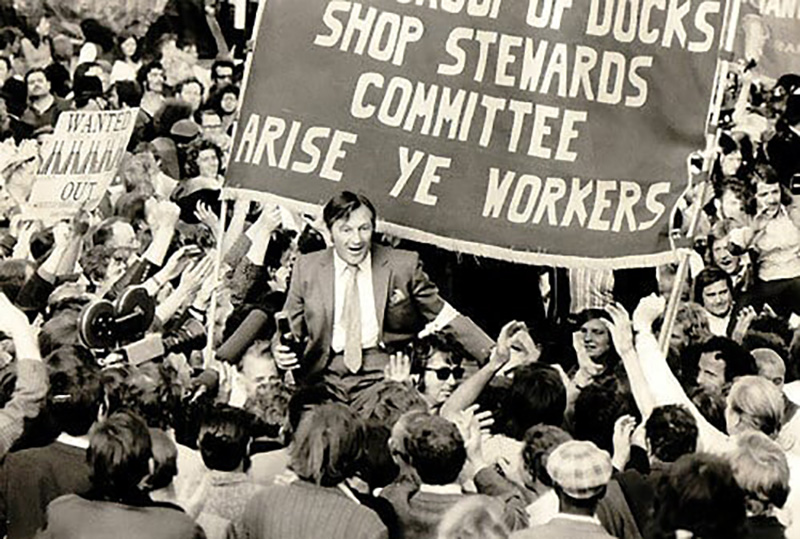
The early seventies through to the mid eighties were a time of clear and present class struggle, unions mobilised to defend their members in the face of international crises and recessions. In a sense this period was both started and ended by miners’ struggles, with victory against Heath in 72 and defeat against a vengeful Thatcher in 84/85.
The comment that ‘class was a state of mind,’ I came to see as a justification for a left largely led and dominated by people who were not a product of the struggles among workers, and in my opinion this is a large reason why they were so factional and divided. What does any of this have to do with working-class culture?
‘Culture’ in general is ‘the way things are done.’ That applies as much in the arts and society as in the routines of everyday life. It is constantly changing, affected by language and regions, but essentially determined by the society we live in and the people we live among. There are people who define ’working class culture’ as the traditions and activities common among working people.
Things like, going to the match, social clubs or community groups. In different areas it could be brass bands, or choirs, cricket teams, or a variety of religious traditions. For me, these are all aspects of culture under capitalism, the economic system in which we live.

All the above activities take place within a framework of capitalist relations, that is religion, sport, the arts, are all regulated and controlled by the state that serves the interests of the capitalist class. Despite the best efforts of supporters to democratise and exert control over football clubs, at the top level they are multi-million pound businesses that exist to produce profit first and foremost, as Man United fans are discovering this does not always equate to winning trophies.
Every area of society is corrupted by this drive for profit, not just sport, but music, literature and art. Of course there are exceptions, where local groups form co-operatives to save a club, or launch a project, but these are increasingly rare as councils have fewer and fewer resources to support such initiatives. Even the fantastic work done by local food banks and charities are a response to conditions created by spiralling prices and falling incomes.
So for me, working class culture does not exist as a separate entity. A culture of resistance occurs wherever people organise against repression, whether that is national, social or economic. This is expressed through unions, campaigns, and movements, through songs and poetry, all artistic forms of expression, that exist in opposition to capitalist society.
We have yet to see the culture humanity is capable of outside a world dominated by capitalist relations, and the drive for profits. Unless of course we look at pre-capitalist forms of art and society, which at least tells us that capitalism hasn’t always been here, human society existed before and hopefully we can make it to a post capitalist world.
By Jack Byrne
 Class Consciousness Project
Leave a comment