
Ever Get The Feeling You’ve Been Cheated?
By Vikki Harper
The history of civilisation is the history of the many exploited by the few. Lend us your ears for a brief lesson before we get to why capitalism is, frankly, crap.
The History of Exploitation in a Nutshell
Slavery was the first epoch of exploitation. In ancient Greece and Rome, slaves were the means of production of the time. They were property, bought or captured, who laboured to enrich their owners. As commodities with no rights, slaves were an essential investment and as such, they were kept alive and fit purely to preserve their owners’ investment — fed, housed, and maintained like beasts of burden to maximise profit.

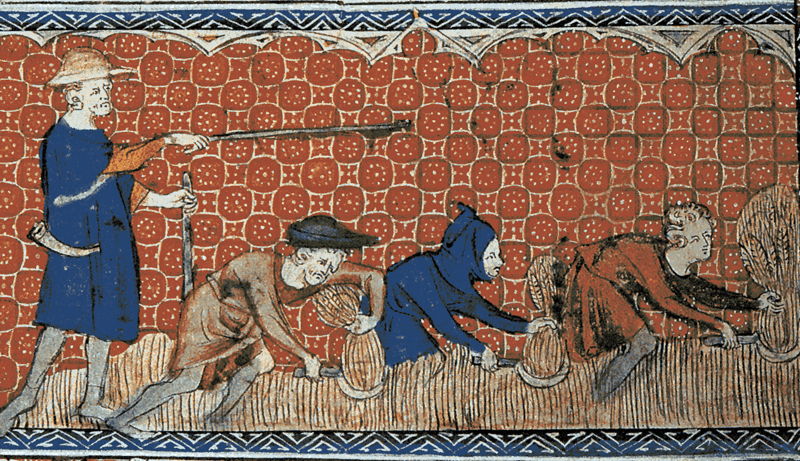
Feudalism, from the 9th to 15th centuries in Europe and Britain, was the next stage in societal development. Serfs were the means of production of that time and were tied to the land, labouring for the lord in exchange for the right to work a small plot for themselves. Once the lord took his share, the serf survived on the scraps. In return, the lord offered ‘protection.’
See the pattern? In each mode of production, the majority labours while a minority extracts the surplus. Yet both slavery and feudalism carried at least some obligation: the exploiter was responsible for the basic survival of their chattel.
Then came capitalism, emerging in the 15th century and dominating by the 17th and 18th. The working class — the proletariat — became the new means of production. Exploitation remained, but now the capitalist owed nothing to the worker. The brilliance of the capitalists was to sell their new system as being underpinned by personal freedom. Workers are ‘free’: free to move, free to sell their labour to anyone, and free to starve if they can’t.
And how has that worked out for us?

In Summary
Three epochs, three forms of exploitation:
- Under slavery, the master was responsible for the slave’s life — his property.
- Under feudalism, the lord had a limited duty to sustain his serfs.
- Under capitalism, the capitalist bears no responsibility at all. The worker is ‘free’ yet dependent — compelled to sell labour or perish.
Capitalism marks the highest development of exploitation. It is exploitation stripped bare: impersonal, market-driven, and utterly devoid of social obligation.
The History of Capitalism in a Nutshell
What a great new system these capitalists created. They have no responsibility for the workers and an abundance of potential labourers, all competing with one another for the opportunity to simply survive.
Proponents of capitalism will talk about its innovation and how it raised general standards of living, which is true. Science and technology, driven by competition and profit mongering have been beneficial to humanity – mostly for the west. But progress came with world wars, poverty, corruption, and relentless injustice, and let’s face it, this late-stage capitalism has been moribund for decades.
Only in the 20th century did workers make real headway in winning basic rights: the vote (not fully until 1928, extended to 18-year-olds you were bestowed the right to die in war at 18 years but not the right to choose who sent them, until 1969 ) the eight-hour day (secured by 1919), and rudimentary welfare. But note when these gains came — after 1917, when the Russian proletariat and peasantry rose up.
1917 represents the beginning of the next epoch of human development – the era of the socialist means of production. For the first time in the history of modern humanity, the exploited class took control of the means of production and did away with profit and the profiteers!

Imagine the terror this struck in the capitalist class? You know from your own life experience that one of the biggest barriers to success is belief. When we believe we can – the chances are, we do! What the Russian people gave workers the world over was the certainty that the prevailing system with its built-in misery, poverty, greed, corruption, lies, exploitation and despair was temporary, beatable and defeatable. What a tremendous gift to receive, what a power to possess!
The Golden Age That Wasn’t
For a few decades mid-century, life for workers in Britain improved: free housing, education and healthcare. Energy and transport were public services based on provision without profit. But these concessions weren’t generosity — they were defensive measures, meant to contain working-class consciousness and dampen revolutionary fervour. Capital had retreated to regroup.
Late-Stage Capitalism: The Rot Intensifies
Today we live in late-stage capitalism, the era of monopoly and imperialism, where the ownership of the means of production is concentrated in so few hands that disparities in wealth are obscene. As workers in Africa, Asia, and Latin America resist colonial and imperialist exploitation, western monopolies and governments turn inward, tightening the screws on us. Everything we once won — the welfare state, public ownership, stability — is being clawed back. Living standards spiral down while billionaires multiply. This is capitalism’s unbroken trajectory until we the workers choose to intervene.
The Way Forward
Life under late-stage capitalism is crap, and it will only get bleaker until we recognise and wield our collective power. We — the working class — create, build, and maintain everything. When we wake up, look beyond the lies, and believe in our capacity to shape the future, we can and will build a new order. Just as our Russian comrades did in 1917, and as workers across the world continue to do today.
 Class Consciousness Project
Leave a comment