
The news that Boeing will not be bringing any commercial airliners to the Singapore Air Show on 24th and 25th February 2024 comes at a time where Boeing’s reputation, and the reputation of its 737 Max airliner, is at an all-time low. This was buttressed by the announcement on 22nd February that Ed Clark, the executive in charge of the 737 Max project, had left the company after nearly 18 years with Boeing.
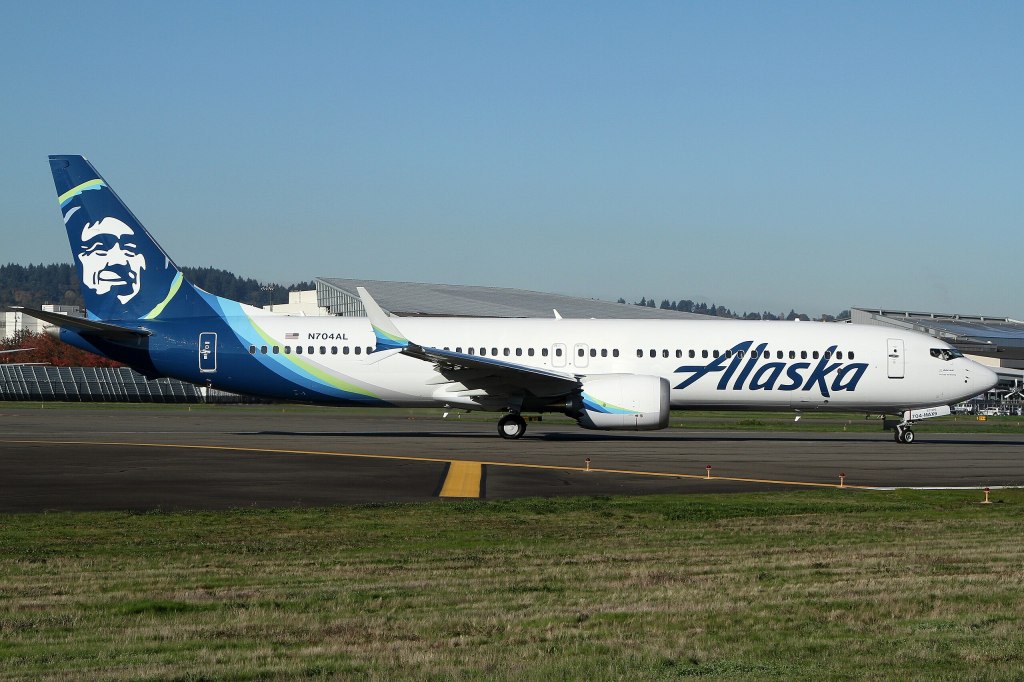
The airliner was involved in another serious incident on January 5th 2024, when Alaskan Airlines Flight 1282 suffered an uncontrolled decompression when one of its fuselage doors blew out when the plane was at 16,000 feet. The incident is particularly striking because the door – which was not actually in use as a door at the time of the accident – is of the ‘plug’ design: It is designed to be larger than the aperture it fits into, which is supposed to ensure that the door cannot be opened during flight. News of the door’s failure and pictures showing the Alaskan Airlines plane, thankfully safely landed on the tarmac with no fatalities but a door missing, would have sent chills down the spines of Boeing’s executives.
The 737 Max aircraft, which Boeing designed and sold to dozens of carriers, has had, to say the least, a checkered service history since its introduction in 2017. On October 29th 2018, Lion Air Flight 610 crashed into the Java Sea thirteen minutes after taking off from Jakarta, Indonesia on a flight to Pangkal Pinang, also in Indonesia. It had been reported to have been flying “erratically” in the few minutes it was in the air. All 189 passengers and crew aboard the plane were killed. The plane had been in the possession of Lion Air for just two months prior to the crash.
Ethiopian Airlines Flight 302 crashed just six minutes after taking off from Addis Ababa airport on its way to Nairobi in Kenya on March 10th 2019. All 149 passengers and crew aboard the plane were killed. Both accidents were linked to a flight management system called MCAS – Manoeuvring Characteristics Augmentation System – which was installed by Boeing on the 737 Max plane, of which we will explain more later.
The 737 first entered service in 1968, was designed for short to medium distance flights and could carry up to 215 passengers. The plane became a phenomenal success – over 11,500 737s have been sold in its 56 year history and only the Airbus 320 rivals it in terms of total sales. The Boeing 737 became, like its Airbus A320 rival, a workhorse airplane of the aviation industry, carrying millions of passengers on flights up to a range of 4,400 miles, depending on the variant of plane operated (the original 737-100 for instance operated up to a range of 1,979 miles) and had an operating life of around thirty years.

As with most models of airplane with a long service history, the Boeing 737 has undergone a number of revisions and refinements. There are now four generations of the plane and the latest, the ‘Max’ generation, included extra seating, greater fuel efficiency and, crucially a lower cost per passenger to operate than its rivals. Revising existing airplanes rather than designing new ones from scratch carries a number of advantages for aircraft manufacturers: Development costs are lower as the plane is derived from an already tried and tested design, pilot training can also be reduced or even avoided entirely as the new plane is a variation of one the pilot would already be qualified and experienced in piloting and the required testing and licensing of the newly-refreshed airplane is much less than it would be for a brand new design.
The evolution of an existing plane also comes with its own potential and real risks. On 8th January 1989, British Midland Airways flight 092, a Boeing 737-400, crashed on an embankment beside the M1 motorway in Kegworth, Leicestershire, while attempting to make an emergency landing owing to an engine failure. 47 passengers were killed. The flight’s captain, Kevin Hunt, mistakenly shut down the right hand engine of the plane when smoke could be smelled coming through the plane’s air-conditioning system. Captain Hunt, familiar with the previous model of 737, believed that the plane’s air-conditioning was fed solely from the right hand engine, as it was on the previous version of the plane. However, the new variant fed its air-conditioning system from both engines and Hunt had shut down the right hand engine when the left hand engine had failed owing to a broken fan blade. The stricken plane crashed just short of the runway at East Midlands Airport and yards from the M1 motorway.
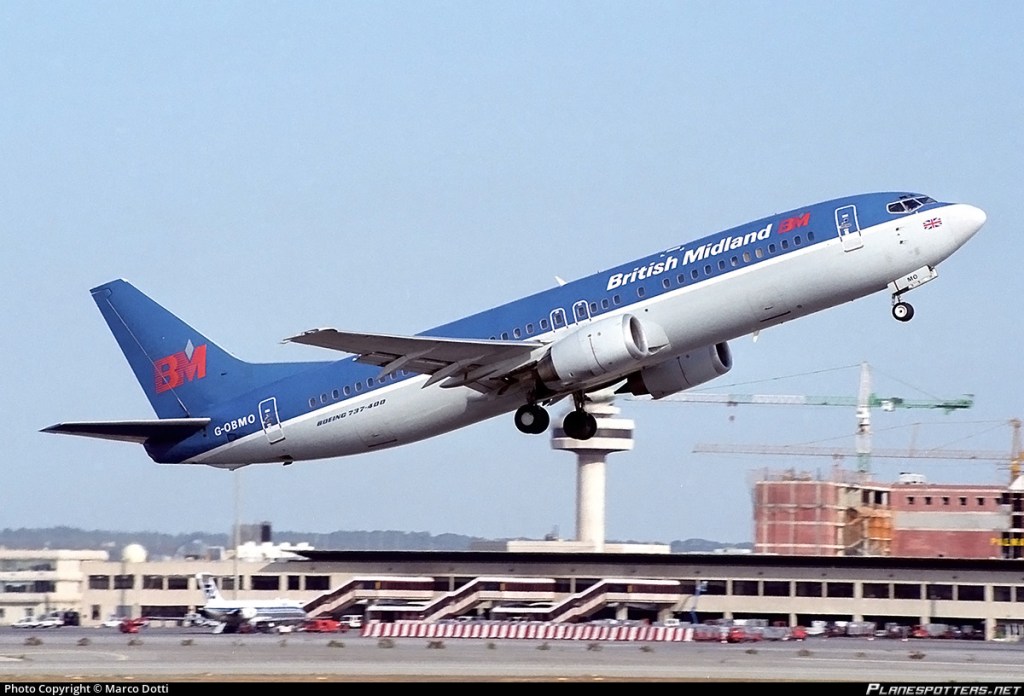
Captain Hunt was not briefed on the change to the plane’s air-conditioning system, though he also failed to complete a check of all the plane’s dials and meters owing to being interrupted by a conversation with local air traffic control. He also had taken no simulator training on the new plane because no simulator for the 737-400 existed in Britain at the time the plane entered service. Additionally, vibration meters in the cockpit, which would have given Captain Hunt a clue as to which engine had failed, was ignored, partly because the meters installed on previous generations of the aircraft were notoriously unreliable and partly because they were redesigned in a way which made them more difficult to read than on previous generations of the plane. Captain Hunt was sacked for his errors – he believed that he paid with his job because he was the “cheapest option” which British Midland had to show it had taken action following the accident. Hunt and British Midland settled out of court after Hunt sued them for unfair dismissal.
Despite the potential risks, for airlines the cost benefits of revised airplanes makes them tempting propositions over newly-designed planes. There is an old saying in the aviation industry: “A plane only makes money when it is in the air” and airlines maintain their incomes when their pilots are actually flying planes, rather than training for hours in simulators. They are as keen to see revised models of tried and tested workhorses like the Boeing 737 as Boeing are to build them. But these evolutions of a design going back over fifty years mean that compromises, and sometimes dramatic changes, have to be made.
In the case of the 737 Max, it was to evolve the plane further into an extremely cost-efficient plane with a greater passenger capacity and an increased range. The fuselage of the plane has been gradually lengthened over the years and the plane’s wings have been redesigned in a manner which has given them a more sleek, slimmer and ‘swept back’ appearance in order to decrease drag and increase fuel efficiency. Part of the compromise of this evolution in wing design has been that the engines, originally mounted directly under the wings of the plane, have had to be re-positioned with each variation to the point where they are mounted under the leading edge of the wing because of their increased weight, projecting noticeably forward in order to increase fuel efficiency and reduce drag.
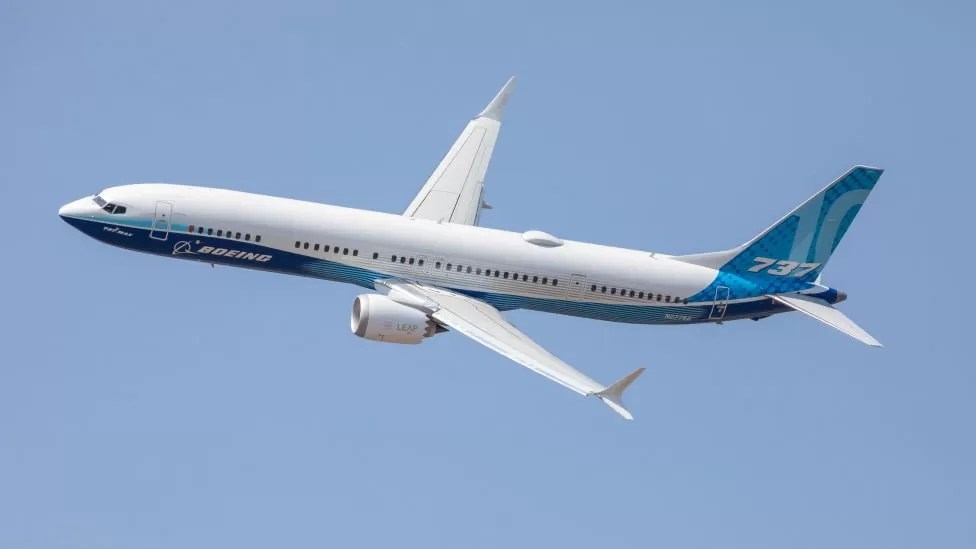
However, this redesign comes with a compromise: Because the wings have been re-profiled and the engines repositioned, the plane is now much more prone to ‘aerodynamic stalling’. An aerodynamic stall happens when insufficient air passes over a wing, causing the plane to literally drop from the sky. With the obvious catastrophic consequences of stalling being obvious, planes are designed to feature systems which can detect a potential stall and warn the flight crew in order that they can take the appropriate steps. Boeing opted to include a system called MCAS – the Manoeuvring Characteristics Augmentation System.
MCAS is not a new system – its history and development dates back to the 1960s and is intended to assist pilots in circumstances when the stability of their aircraft is compromised. The MCAS system uses sensors to detect the plane’s ‘angle of attack’ in flight, that is whether the plane’s nose is pointing upwards or downwards, with upwards being a condition from which an aerodynamic stall could result. Once the system detects what is known as a ‘nose up’ position, the plane will automatically correct the plane’s pitch back to a more ‘nose down’ position, so preventing a stall.
Boeing denied that MCAS is an anti-stall system at all. They said that MCAS is designed to meet a pilot’s handling requirements, however at the time of the 737 Max entering service, pilots were not told that MCAS was even installed on the plane and the presence of MCAS in the plane’s design was not mentioned in its flight manual. There are many reasons for this, including that it was considered by Boeing to be a background system which would make small, almost imperceptible inputs into the plane’s configuration to correct any potentially dangerous ‘nose up’ pitch of the plane, but also because pilots would rightly demand training on a newly-installed system on a new generation of airplane, even if that airplane was a model that had been in service for decades. A pilot training in a simulator or having a classroom briefing on a new plane rather than flying one would not be making money for their employer, so for the airlines it made as much sense as it did for Boeing to keep pilots in the dark about the introduction of MCAS.
In the cases of Lion Air Flight 610 and Ethiopian Airlines Flight 302, pilots of both planes reported handling difficulties, including in maintaining altitude, in the minutes prior to them crashing. In both cases, the MCAS system was attempting to pitch the nose of the plane downwards to counteract what it believed was an impending stall. However, investigations into both accidents found the system had falsely detected sudden and pronounced nose-up pitches, which it then corrected in an equally sudden and pronounced manner. The plane was grounded in March 2019 by 51 aviation regulators around the world owing to serious concern’s about the plane’s airworthiness and by the 18th of the same month, all 737 Max planes in service were grounded. For Boeing, this was a disaster, both fiscally and reputationally – the grounding of airplanes is a last resort for regulators and, generally, permanently damages the reputation of both the plane and its manufacturer.
In 1979, the United States Federal Aviation Authority (FAA) grounded all McDonnell Douglas DC-10 aircraft after American Airlines Flight 191 crashed shortly after taking off from Chicago’s O’Hare Airport on May 25th of that year. The plane came down after its left-hand engine detached from the wing during take off, crippling the plane and fatally damaging the plane’s flight control systems. 271 passengers and crew were killed, as well as two people on the ground. The crash came after two serious incidents involving the plane, including the downing of Turkish Airlines Flight 981, which crashed shortly after take-off from Orly Airport in Paris, France on 3rd March 1974, killing all 346 passengers and crew on board. At the time, it was biggest loss of life in an aviation accident in history and exposed the serious design faults in the plane, including the plane’s cargo door, which blew out as the plane’s cabin pressurised owing to a failure in its locking system, which McDonnell Douglas was aware of at the design stage of the plane’s life.
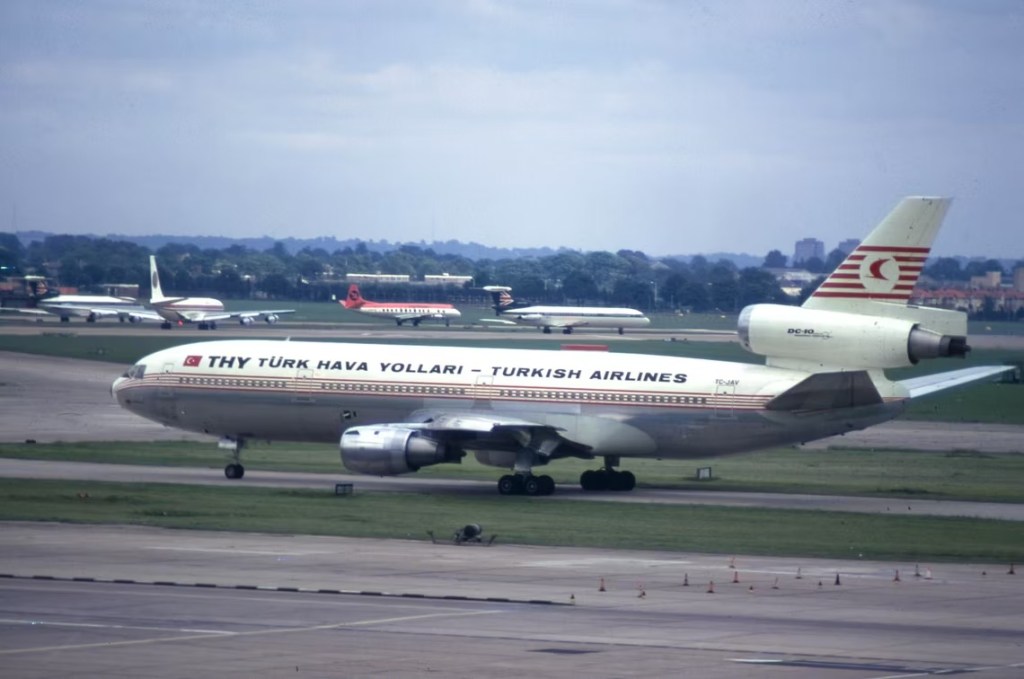
These accidents permanently tarnished the reputation of the DC-10 plane and McDonnell Douglas as its manufacturer. Sales of the plane were deeply affected by McDonnell Douglas’s handling of the issue with the cargo door and, though the accident involving American Airlines Flight 191 was found to have been caused by shoddy maintenance rather than a design issue with the plane itself, passengers and airlines found themselves losing trust and confidence in the plane. The DC-10 served as a chilling reminder to airplane manufacturers of the real-life consequences of approaching design safety in the loose and fast manner employed by McDonnell Douglas.
In the case of the 737 Max, the plane was grounded by the FAA for twenty months, from March 2019 to November 2020, while Boeing responded to the two accidents by making modifications to the cockpit and to the deployment of MCAS which would warn the pilots of a problem with the plane’s pitch rather than make any flight control inputs. It got worse for Boeing – not only had they not informed pilots or airlines of the presence of MCAS in their 737 Max airplanes, they hadn’t informed the FAA, either. Their deceit cost them a $2.5bn fine, levied in January 2021, which was to be split across a number of parties, including as compensation to the families of the 346 people killed in completely avoidable accidents which were found to be the fault of the MCAS system.
Boeing then requested a considerable bailout from the US Government, some $60bn, as it had spent heavily on stock buy-backs and had suffered heavy losses from the fallout from the 737 Max disaster – Boeing had spent a total of $20bn in fines, compensation and legal fees, as well as losing orders for 1,200 737 Max planes, reckoned to have cost the company a further $60bn in lost sales. Instead, Boeing was given a £17bn bailout as part of the Government’s Covid relief fund and allowed to raise a further $25bn from private investment as regulations prohibiting such investments were relaxed by the Trump administration.
How did a company like Boeing, which had built a strong reputation on decades of reliable and safe airplane design and construction, find itself in a quagmire of its own making with a plane which had lost the trust of the travelling public and whose management had been fined for criminal dishonesty? The answer lies in the merger between Boeing and another major airline manufacturer in August 1997.
According to employees of Boeing, interviewed for the Netflix documentary ‘Downfall: The Case Against Boeing’, the turning point for the company came when Boeing merged with McDonnell Douglas, the company responsible for the design and construction of the DC-10 passenger airliner mentioned earlier in this article. McDonnell Douglas had suffered financially in the 1990s as the US military pared back spending following the counter-revolutionary period from 1989 to 1991 in the USSR and Eastern Bloc states, which brought about the ending of the Cold War. The ethos of McDonnell Douglas was starkly different from that of Boeing: Boeing employees interviewed for the Netflix documentary stated that the company, driven by engineering, would design and construct planes to be safe and reliable – profits for the company would then follow naturally.
McDonnell Douglas’s approach was to chase profit at every turn and to boost the company’s share price, an approach which pervaded everything that the company did, including designing a plane in the DC-10 with a known design fault in its cargo door, not fixing the issue when it became aware of the fault and then withholding this information from investigating authorities. At the same time, they used their excessively cozy relationship with the US Federal Aviation Authority to their best advantage: The FAA consistently resisted calls to ground the DC-10 following the Paris Air Disaster in 1974 and the design fault in the cargo door becoming known, because they were ware that it would adversely affect sales of the plane. They were forced to ground the plane only when another 271 passengers and crew were killed when American Airlines Flight 191 at O’Hare International Airport in May 1979.
Whilst the merger of Boeing and McDonnell Douglas appeared to be a takeover by Boeing of a declining rival in McDonnell Douglas, in reality the newly-merged company was, at least culturally, formed by a takeover of Boeing by McDonnell Douglas. The headquarters of the company relocated from Seattle in Washington state, where William Boeing founded the company, to Chicago in 2001. The attention on engineering had been replaced by a chase for profit in everything that the company did. This culminated in the design of the 737 Max and the controversies and disasters which followed from it.
The latest catastrophe to beset the plane, and with it Boeing, has been the failure of a plug door and the subsequent discovery that four bolts, which were part of the assembly which held the door in place, were missing. That nobody was killed in the incident is a miracle, but the accident would not have happened at all were it not for the shoddy workmanship and corner cutting which characterised McDonnell Douglas and now characterise Boeing. Its main rival, the European firm Airbus, has overtaken Boeing in terms of revenue as a direct result of the grounding of the 737 Max and airlines will look to Airbus favourably for orders of planes in the future.
For Boeing, and its 171,000 employees, the future is looking very uncertain.

 Class Consciousness Project
Leave a reply to The Death of John Barnett – Class Consciousness Project Cancel reply