
How a profit driven economy destroys communities
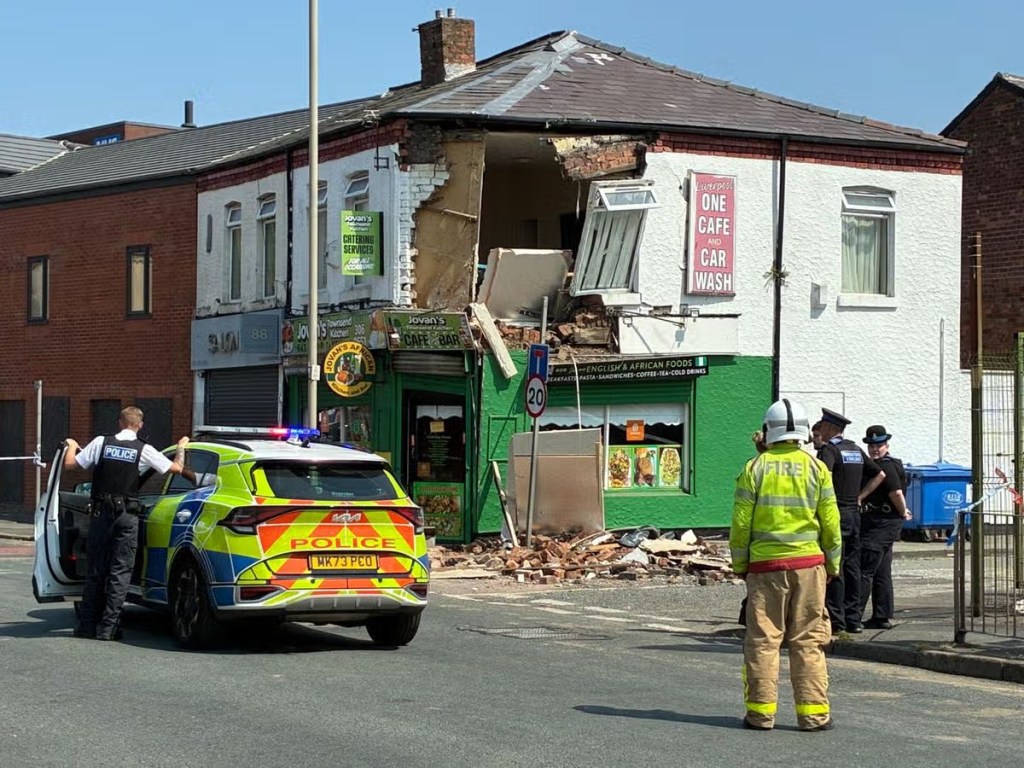
On Wednesday 15 July another building collapsed in Anfield. At 1.50pm, in the middle of the day, on the busy junction of Townsend Lane and Empress Road, the side of a working African café crumbled in real time. Jovan’s African Café was open and trading at the time of the collapse. Fortunately, nobody was harmed during the incident, and the premises was evacuated.
Horrifically, this is not the first article I have written about building collapses in north Liverpool. In May 2024, we published an article called Anfield Building Collapse. In it, I delved into how an unused building had been left to decay for so long that it eventually collapsed into a busy road.
In that article, I also spoke about the worrying history of these incidents. A pattern that demonstrates not only the lack of investment in local services, but also the problems of private ownership.
The truly worrying thing about this incident, in comparison with the others, is that this was a working business. People were serving customers and going about their usual day as the building fell down around them.
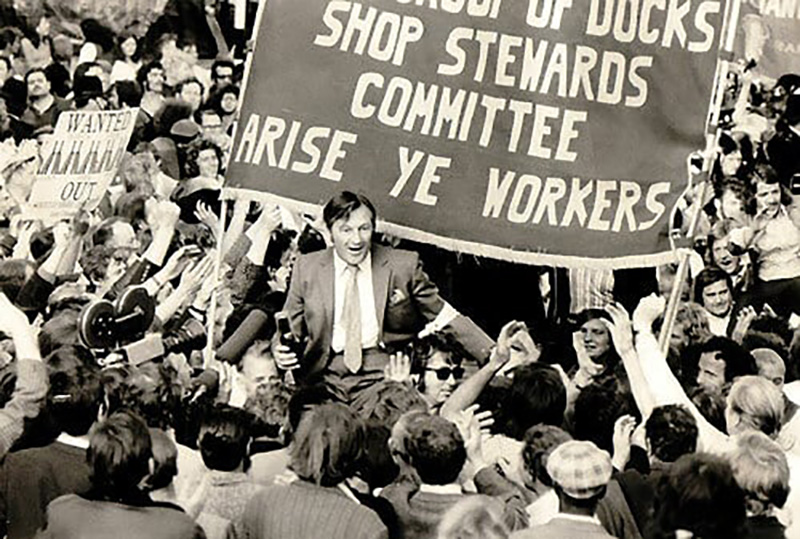
Many times, I’ve spoken about the history of north Liverpool and what it once was. Walton and Anfield were filled with workers from the docks, the expanding railway network that moved goods from the docks, and the food industries whose factories operated throughout the area.
With so much work available, housing construction boomed. Decent-sized homes were built for workers alongside a plethora of small high streets filled with shops, creating more employment, stronger community ties and easier access to everyday goods.
Containerisation of the docks caused a drop in dock labour of around 85%. Alongside this, manufacturing now accounts for just 3.4% of jobs in Liverpool. As employment disappeared, so too did the spending power that sustained local businesses. Shops closed, buildings became less profitable to maintain and investment increasingly flowed elsewhere. Together, these changes have left areas such as Walton and Anfield with unemployment levels around two to two-and-a-half times higher than the national average, with Anfield itself ranked among the most deprived 10% of neighbourhoods in England.
These once proud working-class communities are now falling down around us. Houses that were once large family homes have been turned into homes in multiple occupation (HMOs). Many shops have closed and those that remain are often newsagents, fast-food takeaways, barbers or off-licences. Even the businesses that survive are not immune, as we have seen with the collapse of Jovan’s African Café.
We should not look at what happened on Townsend Lane and think it was simply an unfortunate incident, because it wasn’t. It is the natural conclusion of decades of profit extraction. The industry disappeared, the jobs disappeared with it, investment followed and now the buildings themselves are beginning to crumble. The local paper and the council will treat every collapse as a one-off incident. Simple failures by individual property owners, when in reality they are far from isolated occurrences.
Capitalism created these communities because it needed workers. It built homes, shops and industry because there was profit to be made. Once that profit disappeared, so did the investment. Today, the people remain, but the wealth they created has long since been extracted elsewhere. What is left is a community expected to live amongst crumbling buildings, boarded-up shops and declining public services while politicians continue to promise regeneration that never comes.
Jovan’s African Café is not simply the story of one building collapsing. It is another consequence of a system that has abandoned productive industry and, with it, the communities that depended upon it.
Leave a Reply